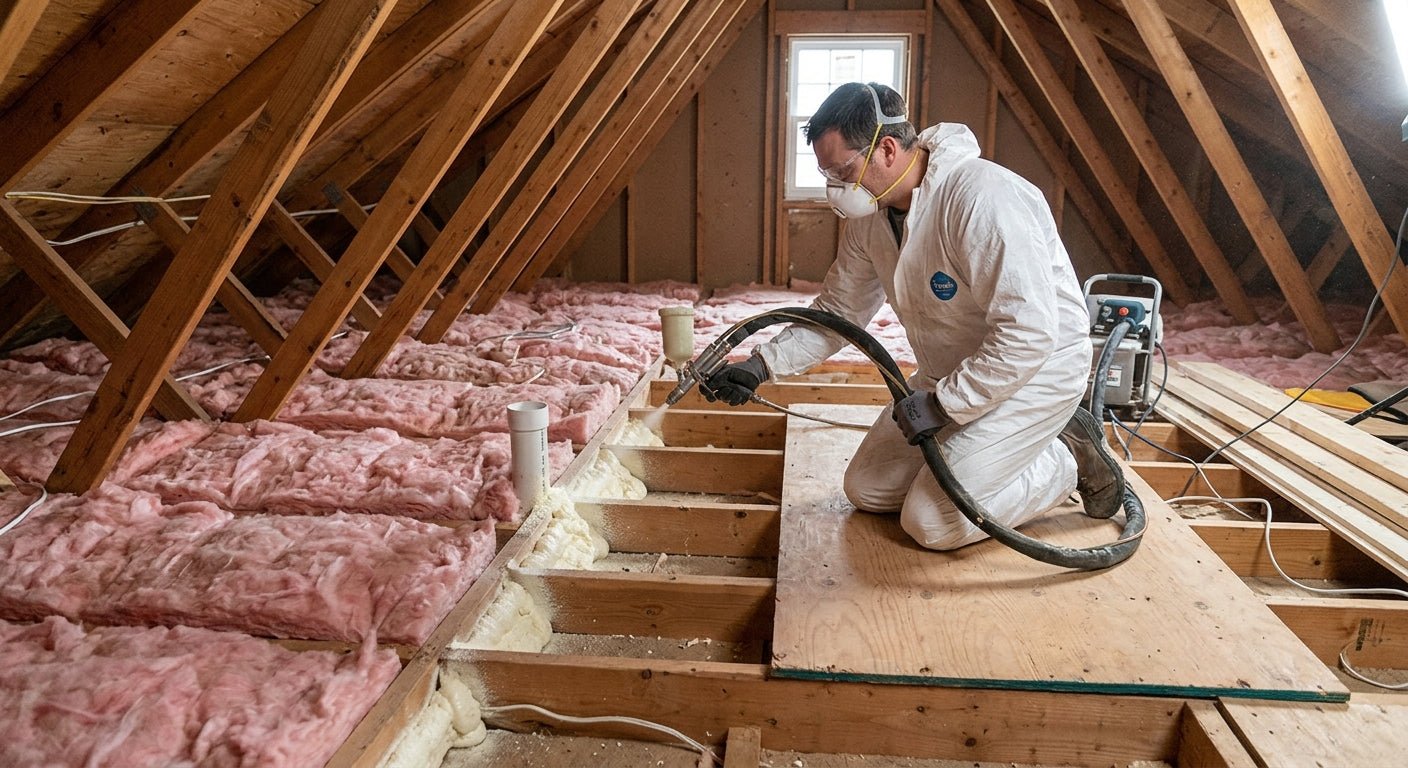
Yes, you can spray foam in some areas that already have insulation, but spraying directly over old insulation is not always the right move. The condition, material, location, and purpose of the new foam all matter.
The problem is simple: old fiberglass, cellulose, or damaged insulation can hide moisture, dust, pests, and air leaks. If foam is added without checking what is underneath, you may seal in a problem instead of improving your home.
The better approach is to inspect first, remove insulation where needed, and give spray foam a clean, dry surface to bond to. This guide explains when existing insulation can stay, when it should go, and what homeowners should check before starting.
Can You Put Spray Foam Over Existing Insulation?
Sometimes. Spray polyurethane foam works best when it can form a continuous layer on a suitable surface. For a simple overview, how spray foam works explains how the material expands to insulate and seal gaps.
In most retrofit projects, the goal is not simply to cover old insulation. The goal is to improve the home’s air and thermal control layers. Foam needs proper contact with its intended surface, and that surface should be clean, dry, and stable.
Quick Answer by Existing Insulation Type
|
Existing insulation |
Spray directly over it? |
Better approach |
|
Fiberglass batts |
Usually not the first choice |
Move or remove batts where foam must bond to sheathing, wood, or masonry |
|
Loose-fill cellulose |
Generally avoid |
Move material aside so gaps and penetrations can be properly sealed |
|
Rigid foam board |
Sometimes |
Check the facer, condition, and foam manufacturer instructions |
|
Existing spray foam |
Sometimes |
Remove loose or damaged sections and confirm product compatibility |
|
Wet or moldy insulation |
No |
Fix the moisture source and remove damaged material first |
Can You Spray Foam Over Fiberglass Insulation?
Spraying directly onto fiberglass batts is usually less useful than exposing the solid surface behind them. Fiberglass can leave gaps or move within a cavity, while spray foam is often used to create a continuous air-control layer against a stable surface.
This is different from flash-and-batt insulation. In this hybrid assembly, spray foam is applied against the sheathing first. Fiberglass is then placed in the remaining cavity space. It does not mean simply coating the face of existing fiberglass with foam.
If you plan to handle the work yourself, review these DIY foam basics before choosing the foam and application method.
Can You Spray Foam Over Cellulose Insulation?
Loose-fill cellulose should normally be moved away from the area you need to air seal. Spraying across loose material can make it difficult to reach cracks, top plates, wiring penetrations, and other common leakage points.
For an existing vented attic, a practical approach is to move loose insulation aside, air-seal the attic floor, and then restore or upgrade the insulation. DOE guidance recommends sealing attic-floor penetrations before the insulation layer is completed.
When Should Old Insulation Be Removed?

Old insulation should come out when leaving it in place would hide damage, block access, or stop the new foam from forming the intended air and insulation layer.
Remove or replace insulation when it is:
-
Wet from roof, plumbing, or foundation leaks
-
Moldy or heavily stained
-
Contaminated by rodents or pests
-
Compressed, sagging, or badly damaged
-
Blocking the surface that needs air sealing
If the insulation is clean, dry, and still useful, some of it may remain. The main question is whether it works with the new air, thermal, and moisture-control plan.
Attic, Wall, and Basement: The Answer Changes by Location
The same insulation combination may work in one part of a house but make little sense in another. Attics, walls, and basements handle airflow and moisture differently, so the existing building assembly should guide the decision.
|
Area |
Main question |
Typical approach |
|
Vented attic |
Are you sealing the ceiling level? |
Air-seal the attic floor before restoring or adding insulation |
|
Unvented attic |
Will the roof deck become the thermal boundary? |
Foam may be applied directly to the roof deck |
|
Open wall cavity |
Can foam reach solid sheathing or framing? |
Remove material blocking the planned foam layer |
|
Closed wall cavity |
Does the project require injection foam? |
Use a system designed for enclosed cavities |
|
Basement or rim joist |
Is the surface dry and leak-free? |
Correct water problems before applying foam |
Attics Need One Clear Thermal Boundary
In a vented attic, the ceiling level normally separates the conditioned home from the unconditioned attic. With an unvented attic, the insulation and air-control layer can move to the roof deck. DOE and building-science guidance treat these as different assembly strategies.
Simply adding roof-deck foam without considering the existing attic-floor insulation can create an unclear thermal boundary. Homeowners planning this type of project can use this attic foam application guide for additional planning.
Existing Walls May Need Injection Foam
A finished wall is different from an open stud cavity. Fast-rise spray foam requires open access to the surface. Enclosed wall retrofits may instead use a slow-rise injection foam designed to expand inside existing cavities. VB Insulation also lists systems made specifically for existing wall cavities.
That difference matters because spraying foam into an open cavity and injecting foam into a finished wall are not the same job. Before starting, review what to know before starting spray foam.
Open-Cell or Closed-Cell Foam Over Existing Insulation?
Both types can provide insulation and air control when installed correctly, but they manage heat and moisture differently. Closed-cell foam is denser, provides more R-value per inch, and has lower vapor permeability than open-cell foam.
|
Factor |
Open-cell foam |
Closed-cell foam |
|
Density |
Softer and lighter |
Denser and more rigid |
|
R-value per inch |
Lower |
Higher |
|
Vapor control |
More vapor-permeable |
Lower vapor permeability |
|
Common uses |
Many interior wall and roof assemblies |
Rim joists, basements, walls, and tight spaces |
|
Existing insulation concern |
Check moisture and drying ability |
Avoid trapping moisture between low-permeance layers |
For projects where higher R-value per inch and lower vapor permeability are useful, VB Insulation offers closed-cell foam kits. The product instructions should determine approved surfaces, application thickness, temperature range, and safety requirements.
What Should You Check Before Spraying Foam?

A short inspection can prevent a costly redo. Focus on the condition of the building surface and the complete insulation assembly, not only what the old insulation looks like.
Before spraying:
-
Find and repair active water leaks
-
Check the planned surface for moisture
-
Remove dust and loose or failing material
-
Identify the correct air and thermal boundary
-
Check local fire and foam-protection requirements
-
Follow manufacturer ventilation and PPE instructions
Foam plastic insulation may require approved thermal or ignition protection depending on where it is installed and the building code used in your area. Attics have specific requirements, so local code should be checked before leaving cured foam exposed.
Spray polyurethane foam application can also create vapors, mists, and airborne particles. EPA guidance recommends isolating the work area and using proper ventilation, while industry guidance stresses protective equipment and manufacturer-specific re-entry instructions.
For a kit-based project, these five DIY spray steps can help organize the job once the surface and insulation plan are ready.
Should You Remove Old Insulation Before Spray Foam?
Remove old insulation if it is wet, dirty, damaged, pest-contaminated, or blocking the surface where foam needs to bond. Keeping poor insulation simply to avoid removal work can reduce the value of the upgrade.
Existing insulation may stay when it is clean, dry, useful, and compatible with the new assembly. Planned hybrid systems can combine spray foam with fiberglass or cellulose, but the order and location of each material are important.
For larger homeowner projects, DIY spray foam kits are available in different coverage sizes. Calculate your surface area and required foam thickness before selecting a kit.
What About Spray Foam Over Basement Insulation?
Basements need extra attention because foundation moisture, plumbing leaks, and ground water can affect walls and rim joists. Spray foam should not be used simply to cover an active leak or damp insulation.
Correct drainage, plumbing, or foundation moisture problems first. Then expose and prepare the surface that will receive the foam. This basement spray foam method explains the basic order for a basement insulation project.
Final Answer: Can You Spray Foam Over Existing Insulation?
Yes, spray foam can be added to a home that already has insulation. However, directly spraying over old fiberglass, loose cellulose, or damaged insulation is often not the best approach.
Base the decision on three things: condition, contact, and assembly design. Keep insulation that is dry and compatible. Remove material that hides moisture or blocks proper foam contact. Then place the foam where it can create the air and thermal control your home needs.
FAQs
Can You Spray Foam Directly Over Fiberglass Batts?
It may be possible in certain assemblies, but exposing the solid surface is often better when foam needs to create an air-control layer. In flash-and-batt construction, foam normally goes against the sheathing first, with fiberglass installed afterward.
Do I Need to Remove Attic Insulation Before Spray Foaming the Roof Deck?
It depends on whether you are keeping a vented attic or converting it to an unvented attic. Roof-deck foam changes where the home’s thermal boundary sits, so the existing attic-floor insulation should be considered as part of the full design.
Can Spray Foam Be Applied Over Old Spray Foam?
Sometimes. Existing foam should be firmly attached, clean, dry, and compatible with the new product. Loose, damaged, wet, or contaminated sections should be corrected before another layer is applied.
Can Spray Foam Trap Moisture Behind Existing Insulation?
Yes, moisture problems can occur when wet materials are covered or when an assembly cannot dry properly. Repair leaks first and consider how the wall, roof, or basement manages moisture before changing its insulation layers.
Is It Better to Remove Old Insulation First?
It is usually better when the old material is wet, damaged, dirty, contaminated, or blocking the surface that needs air sealing. Good existing insulation can sometimes remain when it is part of a properly planned hybrid insulation system.