Spray foam insulation is one of the most effective ways to improve energy efficiency, indoor comfort, and air sealing in a home or light commercial space. But if you’re planning an installation or considering a DIY approach it’s natural to ask an important safety question: how long should you stay out of the house after spray foam insulation?
The short answer is usually 24 to 48 hours, but the exact timeline depends on several factors, including the type of foam used, ventilation, and the size of the project. Understanding why this waiting period matters and what affects it can help you plan safely and confidently especially if you’re budget-conscious or managing the project yourself.
Why You Need to Leave the House After Spray Foam Insulation
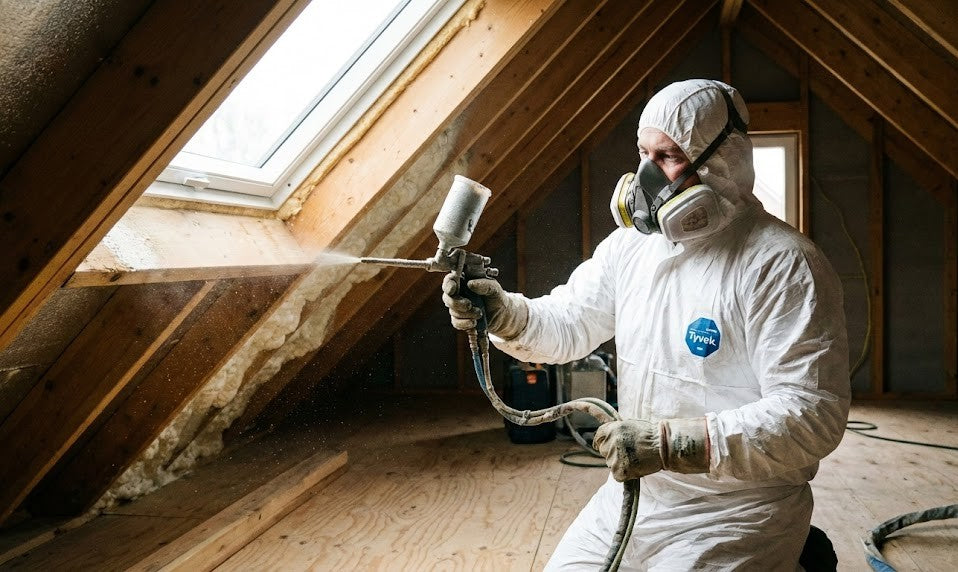
Spray foam insulation is applied as a liquid mixture that rapidly expands and hardens. During application, the foam undergoes a chemical reaction that releases fumes and airborne particles. These are temporary but can be irritating or unsafe to inhale, especially in enclosed spaces.
That’s why installers use respirators and why homeowners, pets, and occupants are advised to leave during and immediately after installation. The goal isn’t just comfort, it's safety. Proper curing and ventilation ensure that once you return, the space is stable, odor-free, and safe for everyday living.
How Long Do You Need to Stay Out of the House?

Standard Recommendation: 24–48 Hours
For most residential projects, the recommended re-entry time is 24 hours for open-cell applications and up to 48 hours for closed-cell applications. This window allows the foam to fully cure and for any residual fumes to dissipate.
In many cases, the odor may fade sooner than that but “no smell” doesn’t always mean the curing process is complete. Waiting the full recommended time provides an extra margin of safety, particularly for families with children or anyone sensitive to airborne chemicals.
Quick Reference: Typical Re-Entry Times
|
Spray Foam Type |
Typical “Stay Out” Time |
Common Use Cases |
Notes |
|
Open-cell |
~24 hours |
Interior walls, attics, sound dampening |
Usually cures faster, lighter density |
|
Closed-cell |
~48 hours |
Crawl spaces, basements, metal buildings |
Higher density, often stronger initial odor |
|
Fire-block foam (spot sealing) |
Varies (small areas) |
Penetrations, code-required sealing |
Follow label guidance and ventilation best practices |
Does Spray Foam Type Affect Re-Entry Time?
Yes foam type plays a major role in how long you should stay out of the house.
Open-Cell Spray Foam
Lightweight and more vapor-permeable, open-cell foam expands quickly and generally cures faster. Because it’s less dense and allows for more airflow, re-entry is often safe after about 24 hours under normal conditions.
Closed-Cell Spray Foam
Denser and more rigid, closed-cell foam delivers higher R-values and strong moisture resistance. Because of its density and chemistry, it commonly requires closer to 48 hours before the home is considered ready for normal occupancy especially if ventilation is limited.
Factors That Can Change How Long You Should Stay Out
While foam type sets the baseline, several other variables can affect re-entry time:
- Project size: A whole-house installation produces more fumes than a small attic job
- Ventilation: Homes with good airflow clear fumes faster
- Weather conditions: Temperature and humidity can influence curing speed
- Installation area: Attics and crawl spaces may trap fumes longer than open areas
- HVAC layout: Shared ducting can move odors from one zone to another
- Occupant sensitivity: Those with asthma or chemical sensitivities may need extra time
Factors vs. Timeline Impact (At a Glance)
|
Factor |
What It Changes |
Likely Effect |
|
Larger application area |
Total fumes and cure load |
Often longer “stay out” window |
|
Poor ventilation |
Air exchange rate |
Odors linger longer |
|
Low temperature / high humidity |
Cure rate |
Slower curing |
|
Enclosed spaces (attic/crawl) |
Fume concentration |
Higher intensity, longer clearance |
|
Sensitive occupants |
Comfort and safety margin |
Add extra buffer time |
Is Spray Foam Insulation Safe After It Cures?
Yes. Once fully cured, spray foam insulation becomes an inert, stable material. It no longer emits fumes and does not pose a health risk when properly installed. In fact, cured spray foam can improve indoor air quality over time by sealing gaps that allow dust, pollen, and outdoor pollutants into the building.
For code-driven sealing especially around wiring and plumbing penetrations products like fire-blocking foam can play a role in creating a more complete and compliant air-sealing strategy.
Can You Stay in the House During Installation?
In most cases, no staying in the house during installation is not recommended. Even if work is limited to an attic or crawl space, fumes can travel through shared air pathways and HVAC systems.
This is particularly important for:
- Children
- Pets
- Elderly occupants
- Anyone with asthma, allergies, or respiratory sensitivity
If you’re trying to minimize disruption, ask your installer if the project can be staged in phases. Even then, plan on being out of the home during spraying and early curing.
How to Reduce Spray Foam Odors Faster
Curing takes time, but you can help odors clear more efficiently with a few practical steps:
- Maintain strong ventilation during and after installation
- Avoid “trapping” fumes by keeping interior doors open (where appropriate)
- Use fans to encourage airflow after spraying has ended
- Keep HVAC intake areas from pulling fumes through the system (installer guidance matters here)
If you’re doing hands-on work, don’t cut corners on protective gear especially respiratory protection since exposure is most risky during application and immediate curing.
DIY vs. Professional Spray Foam Installation: Safety Differences

DIY spray foam kits can be appealing for budget-conscious homeowners and fabricators, but they come with added responsibility. Improper mixing, applying foam too thick, insufficient ventilation, or re-entering too early can increase odor duration and exposure risk.
If you’re exploring a DIY route, it helps to understand the full process and practical pitfalls before committing. VB Insulation has a detailed guide on DIY spray foam that breaks down tools, steps, and realistic expectations. It’s also smart to review key safety and planning considerations before starting, especially if you’re working in enclosed areas like attics or crawl spaces.
Why Choose VB Insulation for Spray Foam Projects?
Whether you’re insulating a home, workshop, or light commercial space, the difference between a smooth experience and a stressful one often comes down to planning, product selection, and safety practices. VB Insulation focuses on practical solutions that support comfort and efficiency without overcomplicating the process.
If you want help choosing foam type, mapping out re-entry timelines, or selecting the right approach for your budget and goals, reach out to the VB Insulation team.
Frequently Asked Questions
Can I sleep in my house after spray foam insulation?
It’s best to wait the full recommended 24–48 hours before sleeping in the home, even if odors seem minimal. Sleeping means prolonged exposure time, so don’t rush this step.
How long do spray foam fumes last?
Fumes are strongest during application and typically reduce significantly within the first day or two, especially with strong ventilation.
Is spray foam insulation safe for pets and kids?
Yes once cured. Pets and children should stay out during spraying and curing, just like adults.
Does spray foam smell forever?
No. Any odor is temporary and should fade fully after curing. Persistent odor usually points to ventilation issues or application problems that should be addressed.
How do I know when it’s safe to return?
Use your installer’s guidance first. In general, follow the recommended time window, confirm ventilation was maintained, and don’t rely solely on smell as your indicator.