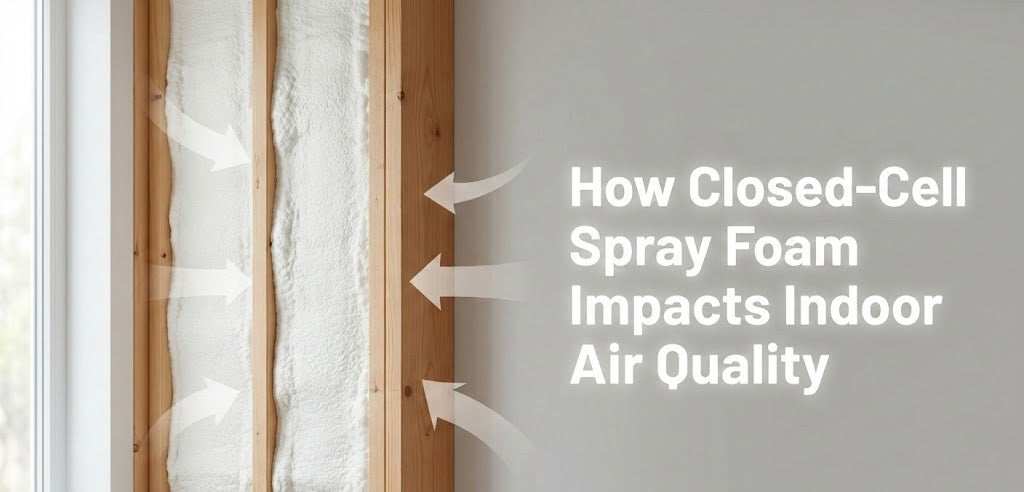
Indoor air quality (IAQ) affects how comfortable and healthy your home or work space feels every day. If you’re a DIY homeowner, a fabricator working in a shop, or a handyman handling light commercial projects, insulation choices can influence more than energy bills. They can change how much dust enters, how humidity behaves, and whether indoor air feels stale or fresh.
Closed-cell spray foam is often chosen for its high R-value and air-sealing ability. But because it can tighten a building envelope dramatically, it also changes how air moves in and out of the space. That’s where indoor air quality comes in.
This guide explains the real-world IAQ impacts of closed-cell spray foam both the upsides and the things to plan for so you can make a smarter decision for comfort, safety, and long-term value.

What Is Closed-Cell Spray Foam Insulation?
Closed-cell spray foam is a rigid, dense insulation that expands after application to fill cracks, gaps, and cavities. Once cured, it forms a continuous layer that helps block airflow and resists moisture movement.
Many homeowners and light commercial users choose it because it can combine insulation, air barrier, and vapor resistance in one material. If you’re comparing products for a project, VB Insulation’s closed-cell foam options are typically suited for areas where strength, moisture resistance, and thermal performance matter.
Where it’s commonly used:
- Rim joists and basement walls
- Crawl spaces
- Garages and workshops
- Metal buildings and fabrication spaces
- Areas with high humidity concerns
Indoor Air Quality: The Basics
Indoor air quality is a mix of what’s in the air and how that air circulates. A space can look clean and still have problems like fine dust, humidity imbalance, lingering odors, or chemical irritants. The most common IAQ troublemakers in homes and small commercial spaces include:
- Particles and allergens: dust, pollen, fibers
- Moisture and biological growth: mold spores, mildew
- Chemical pollutants: VOCs from products and materials
- Combustion byproducts: from gas appliances, generators, or attached garages
- Ventilation issues: stale air when a building is too tight without fresh-air strategy
Insulation matters because it influences air leakage, which controls how pollutants enter and exit and how moisture behaves inside walls and cavities.
Positive Impacts of Closed-Cell Spray Foam on IAQ

When installed properly, closed-cell spray foam can improve indoor air quality in several practical ways, especially for energy- and comfort-focused users.
Airtight Sealing That Blocks Outdoor Pollutants
A surprising amount of indoor dust and allergens can come from outside pulled in through small gaps around sill plates, attic penetrations, framing joints, and utility runs. Closed-cell spray foam expands into these gaps and hardens, reducing uncontrolled air leakage.
That can mean fewer drafts, less dust intrusion, and reduced pathways for pollen and outdoor particulates to creep in.
Moisture Control That Helps Reduce Mold Risk
Moisture problems are among the fastest ways to ruin indoor air quality. High humidity and damp building cavities create an environment where mold and mildew can grow, releasing spores and odors.
Closed-cell foam resists water absorption and can slow vapor movement, helping keep wall assemblies and cavities drier particularly in basements, crawl spaces, and garages.
More Stable Temperatures That Reduce Condensation
Cold surfaces and temperature swings can lead to condensation especially in corners, rim joists, and metal buildings. Condensation doesn’t just damage materials; it can increase humidity and musty odors.
Closed-cell spray foam reduces temperature fluctuation across building surfaces, which can lower condensation risk and support a healthier humidity balance.
Fewer Allergen Pathways and Less “Attic Smell”
In many homes, odors and irritants travel through air leaks especially between attic spaces, garages, and living areas. Spray foam’s sealing can reduce that transfer, which helps indoor air feel cleaner and more consistent.
Potential Concerns and Air Quality Considerations
Closed-cell spray foam can be a big IAQ win, but it’s not “set it and forget it.” The most common issues come from curing emissions, ventilation planning, and installation quality.
VOC Off-Gassing During and After Application

Spray foam can release VOCs during installation and while curing. This is usually temporary, but it matters for DIY projects and occupied buildings.
To reduce risk:
- Keep the area ventilated during application and curing
- Avoid occupying the space until curing guidelines are met
- Use appropriate protective gear when handling spray foam materials and working in enclosed areas
Airtight Doesn’t Automatically Mean “Healthy Air”
A tighter building envelope reduces energy loss but it can also trap indoor pollutants if fresh-air exchange isn’t addressed. In homes, that could mean cooking moisture lingers longer. In workshops, it could mean fumes from solvents or finishes hang around.
If you’re making your space significantly tighter, consider ventilation as part of the plan (bath fans, range hoods, or balanced ventilation options depending on the project).
Long-Term Issues Usually Come from Moisture and Assembly Design
Closed-cell foam can help block moisture but if a building assembly already has moisture issues (bulk water entry, hidden leaks, poor drainage), foam won’t magically fix them. Trapped moisture in the wrong place can still contribute to odor, deterioration, and air quality issues over time.
Material Quality and Technique Matter
Improper mixing, rushed passes, spraying onto wet/dirty surfaces, or ignoring temperature requirements can cause performance problems and potentially extended odors. For DIYers, following proven methods is essential.
Closed-Cell vs. Open-Cell: IAQ Differences That Matter

Closed-cell and open-cell spray foams behave differently with moisture and vapor, which can influence indoor air conditions depending on where you install them.
If you’re comparing options for a specific wall or roof assembly, VB Insulation’s open-cell insulation collection is typically more vapor-permeable, which can be helpful in certain designs but it may require different moisture and air-sealing strategies than closed-cell.
Quick Comparison Table
|
Feature |
Closed-Cell Spray Foam |
Open-Cell Spray Foam |
|
Density |
High (rigid) |
Lower (softer) |
|
Air sealing |
Excellent |
Very good (thickness dependent) |
|
Moisture resistance |
High |
Moderate |
|
Vapor permeability |
Lower |
Higher |
|
Common use zones |
Basements, crawl spaces, metal buildings |
Interior walls, some rooflines |
|
IAQ strengths |
Blocks outdoor pollutants + controls moisture |
Good air seal + can allow drying in some assemblies |
Fire Safety and Air Pathways
Air leaks don’t just move dust they can move smoke and combustion byproducts. Sealing penetrations and gaps helps reduce unwanted air pathways through framing cavities.
In areas like wiring penetrations, top plates, and utility runs, using a code-appropriatefire-blocking foam can support safer detailing while still improving air sealing.
Practical Tips for Healthy Indoor Air With Spray Foam
If your goal is better comfort and better air quality, these habits help you get the upside without common downsides.
Before Installation
- Fix bulk water issues first (roof leaks, foundation seepage, plumbing leaks)
- Plan ventilation if you’re significantly tightening the space
- Know what areas are best suited for closed-cell vs. other materials
For a deeper walkthrough of planning and preparation, VB Insulation’sDIY guidance covers the practical groundwork that prevents costly mistakes.
During Installation
- Ventilate aggressively (fans + open pathways to the outdoors)
- Use the right PPE, and avoid spraying in occupied zones
- Follow temperature and pass-thickness guidelines
After Installation
- Allow full cure time before spending long hours in the space
- Watch humidity levels over the next few weeks
- Upgrade HVAC filtration if dust is a recurring issue
- Use exhaust fans in kitchens, baths, and laundry areas
Signs Your Space Needs Better Ventilation After Air Sealing
Spray foam doesn’t “create” pollutants but it can make existing ones more noticeable if fresh-air exchange drops. Watch for:
|
Symptom |
What It Can Suggest |
Helpful Next Step |
|
Persistent odors |
Low air exchange |
Add/upgrade exhaust ventilation |
|
Condensation on windows |
Excess humidity |
Reduce moisture sources + ventilate |
|
Headaches or irritation |
VOC sensitivity or stale air |
Increase fresh air + verify cure time |
|
Musty smell |
Moisture issue |
Identify source (leaks/humidity) quickly |
|
Dust feels worse |
Filtration/airflow imbalance |
Improve filters + reduce leakage paths strategically |
When Professional Help Makes Sense
DIY projects can work well for certain applications, but some situations benefit from experienced input especially when indoor air quality is a priority:
- Large square footage or whole-home air sealing
- Basements/crawl spaces with known moisture history
- Homes with asthma/allergy sensitivity
- Mixed-use spaces (living area + workshop) with fumes or particulates
If you want help choosing the right foam type, planning ventilation, or selecting project-safe materials, you can get support to avoid trial-and-error and protect long-term air quality.
Conclusion
Closed-cell spray foam can improve indoor air quality by sealing out outdoor pollutants, controlling moisture, reducing allergen pathways, and stabilizing temperatures. The key is pairing that performance with smart planning especially around ventilation and curing time so your space stays efficient and comfortable to breathe in.
When installed correctly and matched to the right application, closed-cell spray foam isn’t just an insulation upgrade it’s a building-envelope upgrade that can make indoor air feel noticeably cleaner, drier, and more consistent over time.