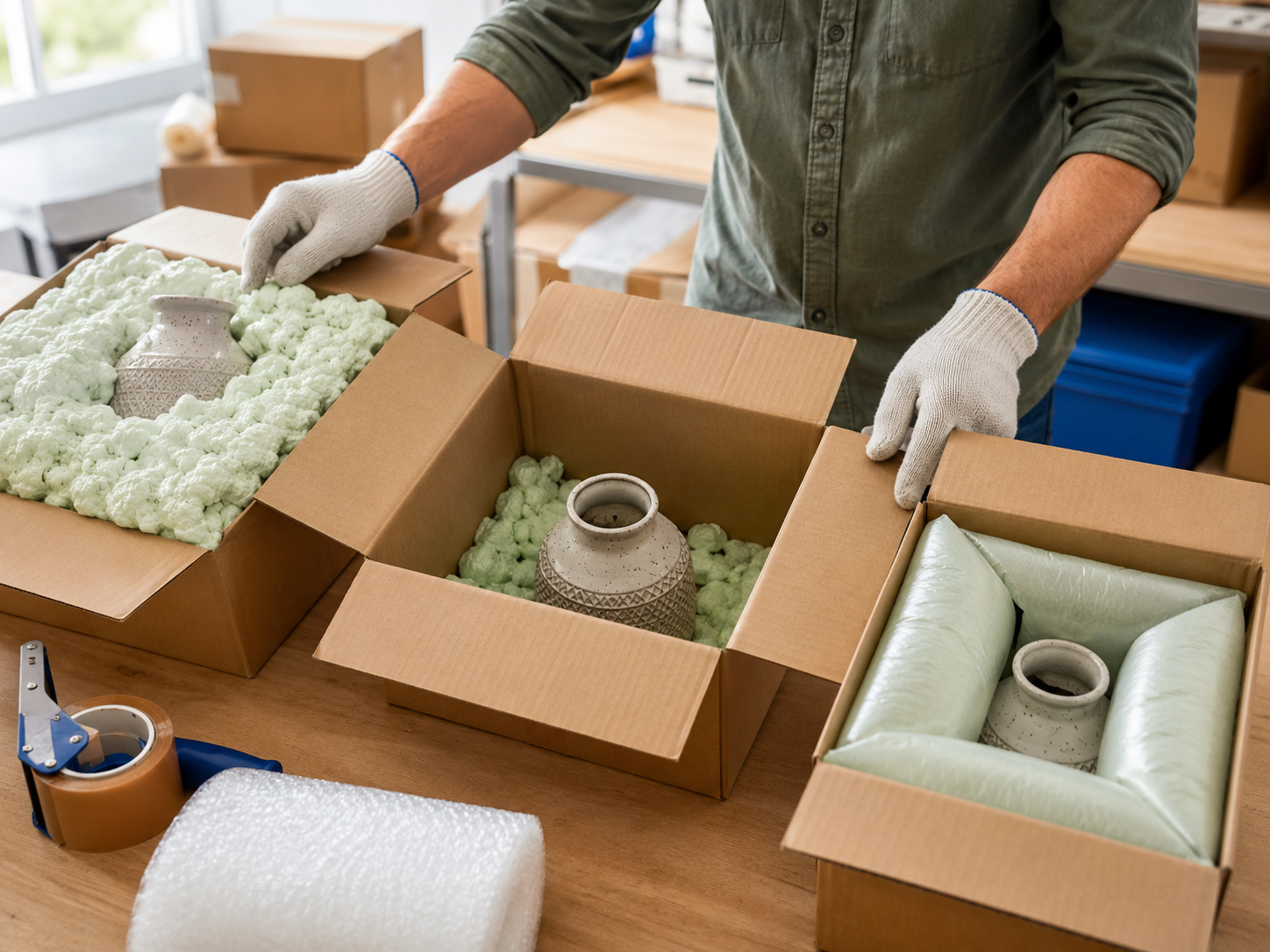
Expanding packaging foam can protect fragile, heavy, and oddly shaped products during shipping. It forms a custom cushion around the item, fills empty space, and helps reduce movement inside the box. When used correctly, it can lower the risk of cracks, dents, broken edges, and costly returns.
The problem is that expanding foam is easy to misuse. Too much foam can crush delicate items, while too little foam can leave products loose inside the package. The wrong foam type, box size, or packing method can turn a protective material into a source of damage.
This guide explains the most common mistakes when using expanding packaging foam. It also shows how to choose the right material, pack products correctly, and avoid safety, waste, and shipping problems.
What Is Expanding Packaging Foam?

Expanding packaging foam is a protective packing material that expands inside a box to create a custom cushion. It is often used for fragile items, heavy parts, electronics, glassware, ceramics, tools, and irregularly shaped products. The foam fills void space and helps hold the product in place during transit.
Packaging foam is not the same as construction foam or wall insulation foam. Construction foam is designed for sealing, bonding, air gaps, or thermal insulation, while packaging foam is designed for cushioning and impact protection.
If you need to understand the difference between packaging use and building use, understanding spray foam basics gives helpful background on how insulation foam behaves.
Many expanding packaging systems use foam-in-place technology. This means the foam expands inside a bag, liner, or film and forms around the product. The goal is to protect the item without letting raw foam touch sensitive surfaces.
Why Businesses Use Expanding Foam for Shipping
Businesses use expanding foam because it creates a fitted cushion around products that are hard to protect with standard packaging. It works well when bubble wrap, air pillows, or paper void fill do not provide enough support. It is especially useful for items with corners, curves, uneven weight, or fragile surfaces.
Expanding foam can also reduce packaging guesswork. Instead of cutting custom inserts for every product, shippers can create a molded cushion during the packing process. For companies comparing foam materials, the packing foam range can support product protection needs where cushioning and void fill are important.
It is also helpful for ecommerce brands that ship products of different sizes. The foam adapts to each item and helps keep it suspended inside the box. This can improve customer experience because the product arrives more securely packed.
When Expanding Packaging Foam Works Best
|
Product Type |
Why Foam Helps |
Packing Risk to Avoid |
|
Glassware and ceramics |
Cushions fragile surfaces and edges |
Too much pressure can crack the item |
|
Electronics |
Reduces movement and vibration |
Direct contact may harm delicate finishes |
|
Auto parts |
Supports heavy or irregular shapes |
Low-density foam may compress |
|
Tools and equipment |
Holds dense products in position |
Sharp edges can cut weak foam |
|
Medical or lab devices |
Creates custom protection |
Poor surface protection can cause damage |
Common Mistakes When Using Expanding Packaging Foam

The biggest mistakes happen when users treat expanding foam as a simple void filler. Foam packaging is not just about filling empty space. It must control movement, absorb shock, and protect the product without adding harmful pressure.
Below are the most common errors to avoid. Each mistake can affect product safety, packaging cost, or customer satisfaction. Fixing these issues can make foam packaging more reliable and easier to scale.
1. Using the Wrong Type of Expanding Foam
One of the most serious mistakes is using the wrong type of foam. Packaging foam should be made for shipping, cushioning, and product protection. Construction foam, insulation foam, or sealant foam should not be used as a direct replacement for packaging foam.
The wrong foam may expand too aggressively, cure too rigidly, or stick to the product surface. It may also create pressure points instead of soft cushioning. For building-related foam projects, users should follow DIY foam guidance, but shipping products require packaging-grade material.
Use packaging foam when the goal is product protection. Use insulation foam when the goal is sealing, insulating, or filling building cavities. Mixing these applications can lead to damaged products and poor performance.
2. Adding Too Much Foam
More foam does not always mean better protection. Expanding foam grows after activation, so overfilling the box can create pressure against the product. This may crack glass, bend thin parts, crush packaging, or deform the outer carton.
Too much foam can also make the package harder to open. Customers may need to cut through excess material, which can damage the product or create a poor unboxing experience. Overfilled boxes may also bulge, making them harder to stack or ship.
The best approach is controlled application. Use the recommended amount for the product weight, box size, and foam type. If you are estimating volume for foam use,foam coverage planning can help explain why material quantity matters before application.
3. Using Too Little Foam
Using too little foam is just as risky as using too much. If the product can move inside the box, it can hit the carton wall during shipping. This can cause chips, cracks, dents, scratches, or internal damage.
Underfilled foam also leaves weak spots around corners and edges. These areas are often the first to break during drops or compression. A package may look secure from the outside but still fail during carrier handling.
The item should not rattle when the box is gently moved. The foam should hold the product in place without forcing it into one side of the box. Good foam packaging balances support and cushioning.
4. Letting Foam Touch Sensitive Product Surfaces
Expanding foam should not touch every product directly. Some surfaces can react badly to pressure, heat, residue, or friction. Painted, polished, coated, glossy, or delicate items need a barrier between the product and the foam.
Foam bags, protective liners, plastic film, or product wrap can help prevent direct contact. These barriers keep the foam contained while still allowing it to mold around the item. This is especially important for electronics, glass, finished wood, metal parts, and display products.
Skipping the barrier can lead to surface marks or stuck material. It can also make unpacking more difficult for the customer. A simple layer of protection can prevent avoidable damage.
5. Choosing the Wrong Box Size
The box size affects how expanding packaging foam performs. A box that is too small does not give the foam room to expand correctly. A box that is too large wastes foam and increases shipping cost.
Oversized boxes also allow more movement before the foam fully supports the product. This can create uneven cushioning and weak protection around one side. A poorly sized carton can reduce the value of even high-quality foam.
Choose a box that leaves enough room for cushioning on all sides. The product should sit in the center with space above, below, and around the edges. The box should also be strong enough for the product weight.
Box Size Mistakes and Their Effects
|
Box Problem |
What Happens |
Better Practice |
|
Box is too small |
Foam presses too hard against product |
Use a larger carton with cushion space |
|
Box is too large |
Foam waste and shipping cost increase |
Right-size the box before packing |
|
Weak corrugated box |
Box bulges or collapses |
Match box strength to product weight |
|
Product sits near wall |
One side has poor impact protection |
Center the product before foam sets |
|
Uneven empty space |
Cushioning becomes inconsistent |
Keep balanced spacing on all sides |
6. Not Centering the Product
The product should not sit against the bottom, side, or corner of the box. If it does, that side has little protection during impact. Expanding foam works best when it surrounds the item evenly.
Centering helps create balanced cushioning. The bottom foam layer absorbs impact from below, while side and top foam reduce movement from other directions. This is important for fragile items and products with sharp corners.
A good method is to create a bottom cushion first. Then place the product in the center before adding side and top foam. This helps the foam form a protective cradle around the item.
7. Ignoring Product Weight and Fragility
Not every product needs the same foam density or cushion thickness. A lightweight ceramic item needs different protection than a heavy metal part. Heavy products can compress soft foam, while fragile products can break if the foam is too rigid.
Product weight, shape, value, and fragility should guide the packing method. Sharp edges may need extra protection before foam is added. Thin surfaces, glass panels, or precision components may need softer cushioning and careful spacing.
This is where testing matters. A package that protects one product may fail with another product of the same size. Foam choice should match the item, not just the box.
8. Closing the Box Before the Foam Sets
Expanding foam needs time to expand and stabilize. If the box is closed, stacked, or moved too early, the foam may shift before it forms a proper cushion. This can leave hollow spots or uneven pressure around the product.
Different foam products have different expansion and setting times. Some systems rise quickly, while others need more time before the package is handled. Fast-rise products can be useful, but they still require correct timing and control.
When speed matters, a fast-rise foam kit can help users understand how rise time affects application behavior. For packaging, always follow the foam manufacturer’s instructions before sealing or stacking boxes. The product should remain stable after the foam has fully formed.
9. Skipping Safety Precautions
Safety is a common blind spot with expanding foam. Some foam systems involve chemicals that can irritate skin, eyes, or the respiratory system. Workers should follow the product label, safety data sheet, and workplace handling instructions.
Gloves, eye protection, and ventilation are important. Training is also important because employees need to know how much foam to use, how to handle spills, and how to avoid contact with uncured material. Businesses that pack regularly should keep protective safety gear available near the packing area.
Do not treat foam as harmless just because it is used in packaging. Safe handling protects workers and reduces mistakes. A clean, organized packing station also improves consistency.
10. Forgetting About Temperature and Storage
Temperature can affect how foam expands, cures, and performs. Foam stored in very cold or hot conditions may not react as expected. Old or poorly stored foam may produce weak, uneven, or inconsistent cushioning.
Storage instructions should be followed carefully. Keep materials in the recommended temperature range and check expiration dates when available. Do not use damaged, leaking, or expired foam components for valuable shipments.
Warehouse teams should also monitor seasonal changes. A foam system that works well in summer may behave differently in winter. Consistent storage creates more consistent packaging results.
11. Using Foam Without Testing the Package
A package can look secure but still fail in transit. Drops, vibration, compression, stacking, and rough handling can reveal weaknesses that are not visible during packing. Testing helps confirm whether the foam and box design actually protect the product.
Basic tests can include a gentle shake test, drop test, and compression review. For higher-value products, use more formal packaging validation. Track damage claims and customer complaints to identify recurring packing issues.
Testing is especially important before scaling a new packaging method. One successful shipment does not prove the design will work for every carrier, route, or climate. Repeated testing builds confidence and reduces product loss.
12. Treating Foam as a Complete Packaging Solution
Expanding foam is only one part of a good packaging system. The box, tape, product wrap, cushion thickness, product orientation, and shipping label all matter. Poor packaging design can still fail even when the foam itself is high quality.
For example, a heavy product in a weak carton may crush the box. A delicate item without a surface barrier may still get marked. A sharp product edge may cut through weak cushioning during movement.
Think of foam as one layer of protection. It should work with the box, wrapping material, and sealing method. This system-based approach creates better results than relying on foam alone.
Correct Way to Use Expanding Packaging Foam
The correct method starts with product assessment. Identify the item’s weight, fragility, surface sensitivity, and shape before choosing foam. Then match the box and cushion method to the product.
Start with a strong carton and a clean packing area. Add a bottom foam cushion first, then place the product in the center of the box. Use barriers or bags when the product surface needs protection.
After the product is positioned, add foam around the sides and top. Let the foam expand and stabilize before sealing the package. If foam tools or dispensers are part of your workflow, quality foam application tools can help improve control and consistency.
Step-by-Step Packing Checklist
- Choose packaging-grade expanding foam.
- Select the right carton size and strength.
- Protect delicate surfaces with wrap, film, or a foam bag.
- Add a bottom cushion before inserting the product.
- Center the product inside the box.
- Apply foam evenly around sides and top.
- Allow full expansion and setting time.
- Check that the product does not move.
- Seal the carton with strong packing tape.
- Test the package before shipping in volume.
Expanding Packaging Foam vs Other Protective Packaging Materials
Expanding foam is powerful, but it is not always the best option. Some products can be protected with paper, bubble wrap, molded pulp, air pillows, or die-cut inserts. The right choice depends on product value, weight, fragility, presentation, and shipping conditions.
Foam is usually best when the product is hard to secure with standard materials. It is also useful when the item has an unusual shape or needs firm blocking and bracing. However, lighter products may not need this level of protection.
Comparing Protective Packaging Options
|
Material |
Best Use |
Main Limitation |
|
Expanding packaging foam |
Fragile, heavy, or irregular products |
Requires careful handling and correct foam amount |
|
Bubble wrap |
Lightweight fragile items |
Weak support for dense or sharp products |
|
Air pillows |
Filling empty space |
Not ideal for heavy or sharp items |
|
Paper cushioning |
General void fill and blocking |
May require more material |
|
Molded pulp |
Standard product shapes |
Less flexible for unusual items |
|
Die-cut foam inserts |
Repeat shipments and premium packaging |
Higher setup and design cost |
|
Corrugated inserts |
Bracing and product separation |
Limited shock absorption |
When You Should Not Use Expanding Packaging Foam

Expanding packaging foam is not ideal for every shipment. Very low-cost items may not justify the material cost. Small lightweight items may be easier to protect with padded mailers, paper cushioning, or bubble wrap.
It may also be a poor choice for products that are highly pressure-sensitive. Thin glass panels, soft finishes, delicate coatings, or flexible parts may need a different cushioning method. If foam is used, a protective barrier and careful testing are essential.
Businesses without proper training or safety controls should also be cautious. Foam systems require correct handling, storage, and application. When the packing team cannot control those variables, a simpler packaging method may be safer.
Sustainability and Disposal Considerations
Expanding packaging foam can reduce product damage, which may reduce replacements, returns, and reshipping waste. However, disposal and recycling can be difficult depending on the foam type and local recycling rules. Businesses should think about sustainability before using foam at scale.
Right-sizing the box helps reduce foam use. Using only the required amount of material also lowers waste and cost. In some cases, reusable inserts, paper cushioning, or molded fiber may be better for lighter products.
A responsible packaging strategy balances product protection and material impact. Damaged products also create waste, so the best solution is not always the lightest material. The goal is to use the right amount of protection without overpacking.
FAQs
What is the biggest mistake when using expanding packaging foam?
The biggest mistake is using the wrong amount of foam. Too little foam allows the product to move, while too much foam can crush or stress fragile items. The correct amount should hold the product firmly without forcing pressure against it.
Use these checks before sealing the box:
- The product does not rattle.
- The carton does not bulge.
- The item is centered.
- The foam has set properly.
- All sides have balanced cushioning.
Can expanding packaging foam damage products?
Yes, expanding packaging foam can damage products when it is applied incorrectly. Damage usually happens because of overfilling, direct surface contact, poor box sizing, or uneven product placement. Sensitive finishes and fragile materials need extra care.
To reduce risk:
- Use foam bags or liners.
- Wrap delicate surfaces first.
- Avoid overfilling the box.
- Keep the item centered.
- Test before bulk shipping.
Is expanding packaging foam the same as construction foam?
No, expanding packaging foam is not the same as construction foam. Packaging foam is made for cushioning and shipping protection, while construction foam is made for sealing, insulating, or filling gaps. Using the wrong material can damage products and create handling problems.
Construction foam may cure too hard or stick to surfaces. It may also expand with too much force for fragile items. Always choose foam designed for packaging when shipping products.