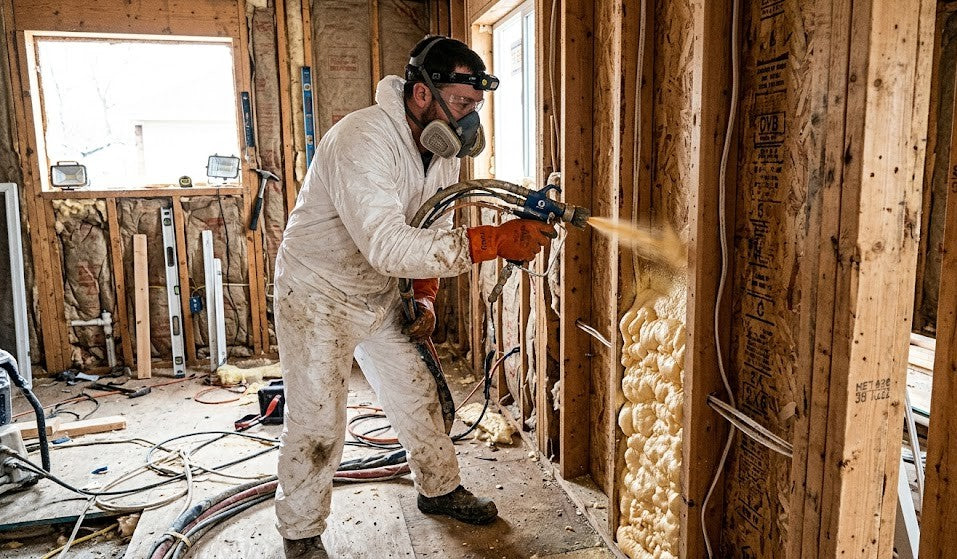
Spray foam does not dry and cure on a single timeline. It starts expanding and becomes tack-free fast, but full curing, safe re-entry, and stable long-term performance depend on product type, temperature, humidity, lift thickness, and ventilation.
For most jobs, the practical answer is this: spray foam can set within minutes, become firm within a short window, and need several hours to fully cure. Many manufacturers and safety agencies still advise following the product label and allowing up to 24 hours for re-entry or re-occupancy in many situations, especially when ventilation is limited.
That matters whether you are a DIY homeowner sealing rim joists, a renovator insulating an attic, or a small contractor planning the next trade on site. If you rush trimming, coating, or re-entry, you can affect adhesion, finish quality, indoor air conditions, and safety.
Key Takeaways
- Spray foam usually sets quickly, often within minutes.
- Full cure often takes several hours, and some products may need 8 to 24 hours depending on the chemistry and conditions.
- Ventilation matters as much as time. Re-entry should follow both cure status and manufacturer guidance.
- One-component cans and two-component kits do not cure on the same timeline.
- Thick passes, cold surfaces, and off-ratio spraying can slow curing and create bad foam.
What “Dry” Means vs. What “Cured” Means
Many buyers use “dry” to mean the foam no longer feels sticky. In practice, installers should separate three stages: cream time, tack-free time, and full cure.
A foam can look finished on the surface while the inner mass is still reacting. That is why a kit may seem ready for trimming quickly, yet still require more time before covering, painting, or allowing full re-occupancy.
Dry to the Touch
This is the early stage when the outer skin is no longer tacky. It can happen fast, especially with small gaps, warm substrates, and properly conditioned chemicals.
Fully Cured
Fully cured foam has completed the main chemical reaction and stabilized enough for intended service. Cure time still varies by product, foam depth, ambient conditions, and ventilation, so the label and technical data sheet always override general rules.
How Long Does Spray Foam Take to Dry and Cure in Real Conditions?

For most users, the best working estimate is this: small one-component foam often cures in about 8 to 24 hours, while some two-component products may allow limited re-entry sooner when proper ventilation is maintained.
EPA materials note that one-component foam commonly falls in the 8 to 24 hour range, while some manufacturers recommend 24 hours for worker re-entry and re-occupancy depending on the product and setup.
Two-component kits and professional SPF systems can become rigid much faster, but that does not mean the area is automatically ready for occupants.
One manufacturer states one-hour occupant re-entry with proper ventilation for a specific product, while BASF guidance notes that without proper ventilation, a 24-hour re-entry and re-occupancy window is advised.
Typical Spray Foam Cure Expectations
|
Spray foam type |
Initial set / tack-free |
Working cure expectation |
Re-entry note |
|
One-component can foam |
Minutes to short period |
Often 8–24 hours |
Follow label guidance closely |
|
Two-component DIY kit |
Very fast reaction |
Several hours to full cure |
Ventilation is critical |
|
Professional open-cell SPF |
Fast expansion |
Several hours, varies by lift and conditions |
Product-specific guidance applies |
|
Professional closed-cell SPF |
Fast expansion and rigid structure |
Several hours, varies by pass thickness and temperature |
Often stricter on lift control and ventilation |
These are field-friendly estimates, not universal rules. Product chemistry, application method, and air movement can change the result significantly.
What Changes Spray Foam Dry Time and Cure Time?
The biggest mistake is assuming cure time is fixed. Spray foam reacts differently from one project to the next, even when the same kit is used.
Temperature of the Chemicals and the Surface
Cold tanks, cold framing, or a cold roof deck slow the reaction. Warm, properly conditioned materials usually expand more evenly and cure more predictably.
If the substrate is too cold, foam can shrink, pull away, or stay soft longer than expected. That is one reason DIY users should review spray foam basics before spraying enclosed cavities.
Humidity and Moisture
Moisture can affect how foam rises and cures. Too much humidity or damp surfaces can create poor adhesion, irregular cell structure, or surface defects.
Open-cell and closed-cell products can react differently here. Buyers comparing attic or wall options should understand the foam type choice before assuming one cure schedule fits both.
Thickness of Each Pass
Medium-density closed-cell foam is commonly applied in controlled lifts, and EPA contractor guidance notes that 2 inches or less is a typical industry recommendation for lift thickness. Thick passes can trap heat, reduce foam quality, and even increase fire risk if the product is applied outside spec.
That is why curing is not just about waiting longer. It is also about spraying the right thickness in the first place, especially when aiming for a target closed-cell depth.
Ventilation Rate
EPA guidance says the area should remain ventilated until the foam has fully cured, off-gassing has stopped, and vapors have been removed. Occupant re-entry should occur only after full ventilation, which means air exchange can matter as much as the clock.
Mixing Ratio and Spray Quality
Off-ratio foam is one of the most common causes of cure problems. When the A and B sides are not balanced, the foam may stay brittle, soft, dark, cracked, or unusually odorous.
DIY users should also watch nozzle changes, hose temperature, and kit pressure. A solid DIY installation guide helps prevent cure issues before they start.
Open-Cell vs. Closed-Cell: Does One Cure Faster?
Both can react quickly, but closed-cell foam usually demands tighter control because it is denser and often sprayed in defined lifts. Open-cell foam is lighter and has a lower R-value, while closed-cell foam has a higher R-value and stronger moisture resistance.
DOE materials place open-cell SPF around R-3.6 to R-3.7 per inch, while sprayed foam products are often estimated near R-5 per inch in general guidance and closed-cell can be higher depending on product.
For cure timing, neither type should be judged by surface feel alone. The right question is whether the foam was sprayed within manufacturer limits and whether the area has been ventilated long enough for the specific application.
Open-Cell and Closed-Cell Cure Considerations
|
Factor |
Open-cell spray foam |
Closed-cell spray foam |
|
Density |
Lower |
Higher |
|
Typical R-value per inch |
Around 3.6–3.7 |
Higher than open-cell; product dependent |
|
Lift sensitivity |
Moderate |
Higher |
|
Moisture resistance |
Lower |
Higher |
|
Risk from over-thick passes |
Lower to moderate |
Higher |
|
Best use case |
Sound control, interior cavities |
Higher R-value, tighter spaces, moisture-prone areas |
If you are deciding what to buy rather than just how long to wait, the broader product comparison matters just as much as cure speed.
When Can You Trim, Cut, Paint, or Cover Spray Foam?

You can often trim excess foam once it is firm and no longer deforming under the blade. For small sealing jobs, that may happen fairly soon after application.
Covering or painting is different. Wait until the foam is fully cured, odor has dissipated, and the product instructions confirm it is ready for the next layer.
For larger insulation jobs, do not let the drywall crew or coating crew rely on a guess. Match the schedule to the product data sheet, not to appearance alone.
How to Tell if Spray Foam Is Still Curing
Watch for a few practical signs before moving to the next step:
- lingering chemical odor
- surface softness or sponginess where it should be rigid
- discoloration, shrinkage, or pull-away
- crumbly or brittle foam
- oily, glossy, or tacky patches
- uneven cell structure or scorched-looking areas
These signs may point to incomplete cure, off-ratio foam, poor substrate conditions, or over-application.
If coverage also looks inconsistent, it helps to calculate how much area the foam should realistically cover using a simple spray foam coverage calculation before assuming the kit failed.
Safety: When Is It Safe to Be Back in the Space?
The safest answer is simple: return only after the manufacturer’s re-entry guidance and ventilation requirements are met. EPA materials note that some manufacturers recommend 24 hours for worker re-entry without PPE and for re-occupancy by residents, though recommendations vary by product.
This matters because spray polyurethane foam chemicals can irritate the eyes, skin, and respiratory system, and isocyanate exposure is a known occupational concern. OSHA identifies isocyanates as linked to asthma, dermatitis, mucous membrane irritation, and hypersensitivity pneumonitis.
Expert Tips for Safer Cure Conditions
- Condition the chemicals to the manufacturer’s recommended temperature.
- Keep the substrate clean and dry.
- Spray in correct lift thicknesses.
- Vent the area continuously during and after spraying.
- Keep other occupants, pets, and unprotected workers out.
- Shut down or isolate HVAC pathways in the work area if required by the job plan.
Common Buyer Questions Before Ordering a Kit

Many buyers do not just want cure time. They want to know whether the kit fits the job, whether they can spray in an attic or crawl space, and whether they need respirators, suits, spare nozzles, or extra hoses.
That is why cure time should be part of the buying decision. A fast-reacting kit is not automatically the best choice if your substrate is cold, your cavity depth is inconsistent, or your ventilation plan is weak, especially when comparing performance differences across s pray foam options.
FAQs
How long does spray foam take to dry?
Spray foam usually becomes tack-free quickly, often within minutes, but full curing usually takes several hours and can range up to 8 to 24 hours depending on the product and job conditions. Always check the specific label because one-component cans, DIY kits, and professional systems do not use the same timeline.
How long should I wait before trimming spray foam?
Wait until the foam is firm, stable, and no longer sticky before trimming. For small jobs, that may be fairly soon, but thick fills and colder conditions can push the safe trimming window later.
Can spray foam cure faster in warm weather?
Yes, warmer conditions usually help spray foam react and cure more predictably. The chemicals and the surface both need to be within the recommended temperature range, or the foam can still cure poorly even on a warm day.
Is spray foam safe after it cures?
Yes, properly installed spray foam is generally intended to be safe in service after full cure and proper ventilation. The risk is highest during spraying and early curing, which is why re-entry timing and PPE matter.
Why is my spray foam still sticky?
Sticky foam usually means the material has not cured correctly. Common causes include:
- off-ratio mixing
- low chemical temperature
- damp substrate
- poor ventilation
- spraying too thick in one pass
Can I sleep in the house the same day after spray foam insulation?
Usually, you should not assume same-day occupancy is safe unless the specific product instructions allow it and ventilation requirements were met. Many sources still reference up to 24 hours for re-occupancy depending on product and ventilation