When it comes to home performance, few areas matter more than your attic. The way your attic is designed directly affects energy efficiency, indoor comfort, moisture control, and even roof lifespan. Choosing between a vented vs unvented attic system is not just a construction detail, it is a long-term investment decision.
Understanding the differences between vented and unvented attic systems allows homeowners to select the option that best fits their climate, home design, and insulation goals. Each system manages airflow, temperature, and moisture differently. Knowing how they function helps you avoid costly mistakes and long-term performance issues.
What Is a Vented Attic System?

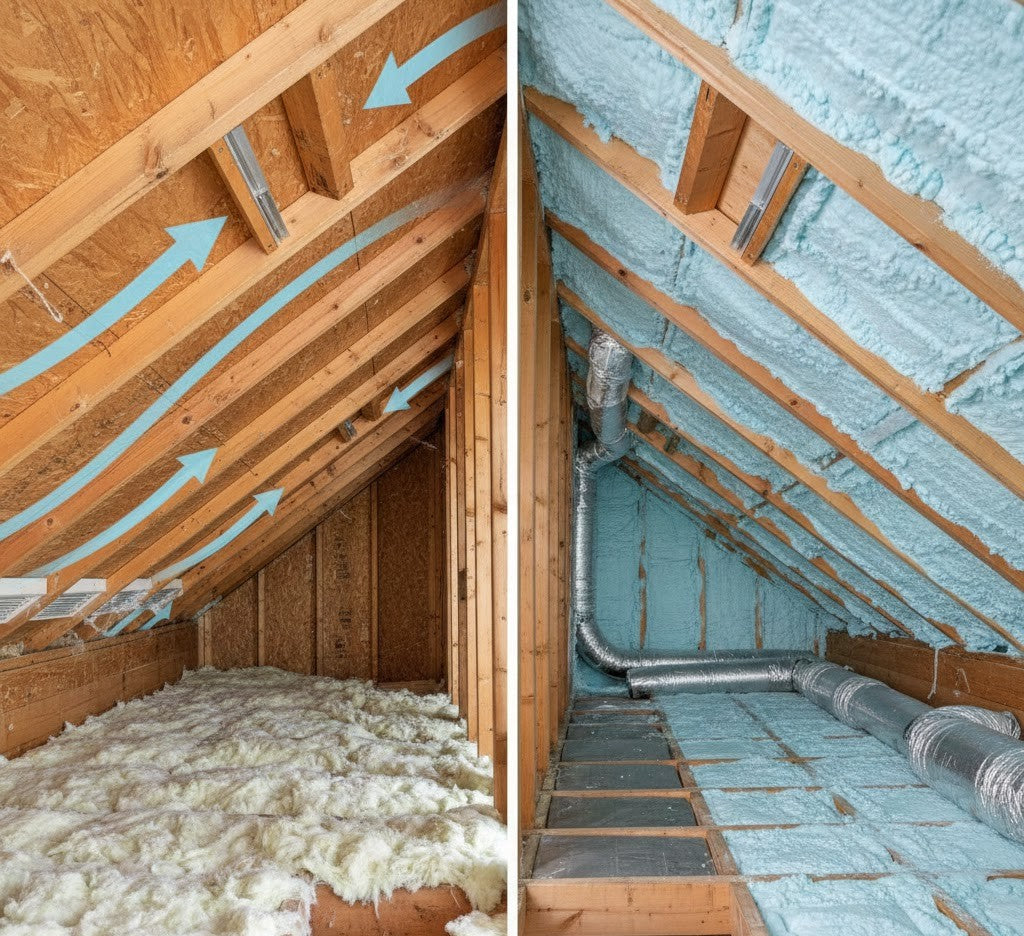
A vented attic system is the traditional attic design used in most older homes. It relies on airflow through intake and exhaust vents to regulate temperature and moisture levels. The insulation is installed on the attic floor, separating the attic from the conditioned living space below.
How Vented Attics Work
A vented attic uses natural airflow to move outside air through the attic space. This airflow typically enters through soffit vents and exits through ridge or gable vents. Insulation remains at the ceiling level, and homeowners often compare materials when deciding what’s the best insulation for this setup.
Key components include:
-
Soffit vents (intake vents at the eaves)
-
Ridge vents or gable vents (exhaust vents at the roof peak)
-
Insulation on the attic floor
-
Air barrier between attic and living space
The goal is to keep the attic temperature close to outdoor conditions while protecting the home below.
Benefits of a Vented Attic
Homeowners often choose vented attic systems for the following advantages:
-
Lower upfront installation cost
-
Proven, traditional design
-
Effective moisture control in colder climates
-
Simpler retrofitting for older homes
Many property owners also explore different attic insulation methods to improve performance without altering the ventilation structure.
Potential Drawbacks of Vented Attics
While common, vented attics are not always the most energy-efficient option. Potential issues include:
-
Higher energy bills in extreme climates
-
Risk of air leakage from living space into attic
-
Ice dams in winter
-
Reduced HVAC efficiency when ductwork runs through attic
What Is an Unvented Attic System?
An unvented attic system, also called a conditioned attic, seals off ventilation openings and moves insulation from the attic floor to the roof deck. This creates a semi-conditioned space that stays closer in temperature to the rest of the home.
How Unvented Attics Work
Instead of allowing outside air into the attic, the space is sealed and insulated along the roofline. Many homeowners use spray foam insulation because it provides both thermal resistance and air sealing in one application.
Key components include:
-
Sealed soffits and ridge vents
-
Insulation applied to roof deck
-
Air-sealed attic envelope
-
Conditioned or semi-conditioned attic air
This design prevents outside air from entering and reduces temperature swings.
Benefits of an Unvented Attic
Modern homes increasingly adopt unvented attic systems for improved efficiency. Benefits include:
-
Improved energy efficiency
-
Lower heating and cooling costs
-
Better indoor comfort
-
Protection for HVAC equipment in attic
-
Reduced risk of moisture condensation
Many installations rely on high-performance materials like closed cell spray foam to create a dense, moisture-resistant barrier.
Potential Drawbacks of Unvented Attics
Despite the benefits, unvented systems may not be right for every home. Consider:
-
Higher initial installation cost
-
Requires professional installation
-
May require building code compliance review
-
Improper installation can trap moisture
Material selection also matters, especially when deciding between open cell vs closed cell insulation types for specific climate conditions.
Vented vs Unvented Attic Systems: Side-by-Side Comparison
Below is a simplified comparison to clarify the key differences.
| Feature | Vented Attic | Unvented Attic |
|---|---|---|
| Insulation Location | Attic floor | Roof deck |
| Airflow | Outside air circulates | Sealed, no outside airflow |
| Energy Efficiency | Moderate | High |
| HVAC Performance | Less efficient if ducts in attic | More efficient |
| Moisture Control | Ventilation-based | Air-sealed control |
| Installation Cost | Lower | Higher |
| Best For | Colder climates, older homes | Hot climates, energy-efficient homes |
Which Attic System Is More Energy Efficient?

Unvented attic systems are generally more energy efficient because they reduce air leakage and thermal transfer. By sealing the attic and insulating the roof deck, conditioned air stays inside the home more effectively.
In vented systems, hot or cold attic air can influence ceiling temperatures and force HVAC systems to work harder. This is especially noticeable in regions with extreme heat. Proper application techniques such as spray foam attic installation significantly impact long-term performance.
Energy Savings Factors
Energy performance depends on:
-
Climate zone
-
Insulation type and R-value
-
Air sealing quality
-
HVAC duct location
-
Roof design
Climate Considerations for Vented vs Unvented Attics
Climate plays a major role in deciding which attic system works best.
Cold Climates
Vented attics can help reduce moisture buildup from indoor humidity rising into the attic. Proper ventilation minimizes condensation and helps prevent ice dams.
Hot and Humid Climates
Unvented attic systems often perform better in hot regions. Sealing the attic prevents humid outdoor air from entering and reduces strain on cooling systems.
Mixed Climates
In areas with both hot summers and cold winters, the decision depends on home design and insulation quality.
Moisture Control: A Critical Factor
Moisture management is one of the most important considerations when comparing vented vs unvented attic systems.
In Vented Attics
Moisture escapes through ventilation airflow. However, this method depends heavily on proper vent placement and adequate airflow.
In Unvented Attics
Moisture is controlled by air sealing and insulation. Materials such as open cell spray foam can provide effective air sealing while allowing controlled vapor permeability when designed correctly.
Improper installation in either system can lead to:
-
Mold growth
-
Wood rot
-
Insulation damage
-
Structural deterioration
Impact on HVAC Systems
If HVAC ducts or air handlers are located in the attic, an unvented attic system often delivers better performance.
Reasons include:
-
Equipment operates in a temperature-controlled space
-
Duct leakage losses are reduced
-
Energy efficiency improves
-
Equipment lifespan may increase
In vented attics, HVAC equipment is exposed to extreme heat or cold, which can reduce efficiency and increase energy bills.
Cost Considerations: Upfront vs Long-Term Value

Homeowners often weigh initial cost against long-term savings.
Initial Installation
-
Vented attic: Lower cost, traditional insulation
-
Unvented attic: Higher cost, typically uses spray foam
Long-Term Savings
Unvented systems may offer:
-
Lower monthly energy bills
-
Improved home resale value
-
Reduced maintenance costs
-
Enhanced comfort
The return on investment depends on energy prices, climate, and insulation quality.
Building Codes and Professional Installation
Building codes vary by region and may specify ventilation requirements. Unvented attic systems must comply with local codes, particularly regarding insulation type and vapor control.
Professional installation is essential to avoid moisture issues and ensure long-term performance.
How to Choose the Right Attic System for Your Home

Selecting between a vented vs unvented attic system should be based on a full home evaluation.
Consider the following:
-
Local climate conditions
-
Age of home
-
Roof structure
-
Insulation condition
-
HVAC location
-
Energy efficiency goals
-
Budget
A professional insulation assessment can determine which approach delivers the best balance of performance and cost.
Signs Your Attic May Need an Upgrade
If you experience any of the following, your attic system may need improvement:
-
High energy bills
-
Uneven room temperatures
-
Ice dams in winter
-
Excessive attic heat in summer
-
Mold or moisture in attic
-
Drafts inside the home
Upgrading attic insulation or converting to a conditioned attic can significantly improve comfort and efficiency.
Frequently Asked Questions
Is an unvented attic better than a vented attic?
Yes, in many cases an unvented attic is more energy efficient because it reduces air leakage and keeps HVAC systems within a conditioned space. Key benefits include:
-
Lower energy bills
-
Improved comfort
-
Reduced moisture risk
Climate and home design ultimately determine the best option.
Do vented attics prevent mold?
Yes, proper ventilation helps reduce moisture buildup that can lead to mold. To prevent mold in a vented attic:
-
Ensure soffit and ridge vents are clear
-
Maintain proper insulation levels
-
Seal air leaks from living space
Improper ventilation can still cause condensation problems.
Can I convert a vented attic to an unvented attic?
Yes, many homes can be converted by sealing vents and insulating the roof deck. Steps typically include:
-
Sealing soffit and ridge vents
-
Applying spray foam insulation to roofline
-
Ensuring proper vapor control
Professional evaluation is required before conversion.
Does an unvented attic increase home value?
Yes, improved energy efficiency and comfort can enhance resale value. Buyers often appreciate lower utility costs and modern insulation systems.
Which attic system lasts longer?
Both systems can last decades when properly installed and maintained. Longevity depends on:
-
Quality of insulation
-
Proper moisture control
-
Professional installation
-
Regular inspection