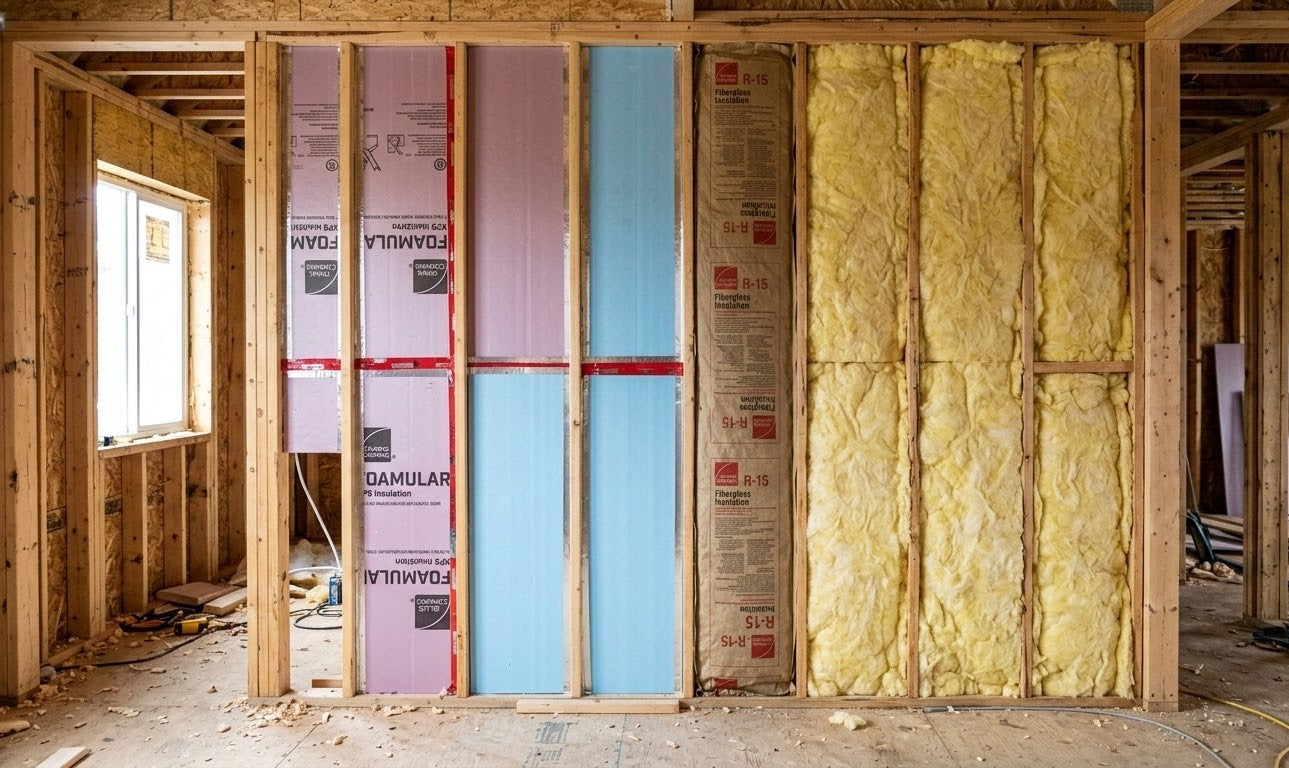
Choosing the right insulation is one of the most important decisions homeowners make when improving energy efficiency and indoor comfort. Two of the most common insulation materials used in residential construction are rigid foam and fiberglass. Each offers distinct advantages, performance levels, and installation considerations that can significantly impact long-term energy savings.
Understanding how rigid foam and fiberglass differ helps homeowners make informed decisions based on climate, budget, and building design. According to the U.S. Department of Energy, insulation quality and proper installation can reduce heating and cooling costs by up to 20%, making insulation selection a critical investment for long-term home performance.
Key Takeaways:
- Rigid foam insulation offers higher R-value per inch (R-4 to R-6.5) and stronger moisture resistance than fiberglass insulation.
- Fiberglass insulation is cheaper and easier to install but provides lower thermal resistance and requires additional air sealing.
- Rigid foam works best in basements, foundations, and exterior walls where air sealing and moisture protection are critical.
- Combining insulation types such as rigid foam outside and fiberglass batts inside can improve overall energy efficiency and building performance.
Understanding Home Insulation Materials

Insulation works by slowing heat transfer between indoor and outdoor environments. Effective insulation reduces heat loss in winter and heat gain in summer, maintaining consistent indoor temperatures and lowering energy bills.
Rigid foam and fiberglass are among the most widely used insulation materials in North American homes. Both serve the same fundamental purpose but differ significantly in structure, performance, moisture resistance, and installation methods.
What Is Rigid Foam Insulation?
Rigid foam insulation consists of dense foam panels made from plastic polymers such as polyisocyanurate, extruded polystyrene (XPS), or expanded polystyrene (EPS). These boards are cut into panels and installed in walls, roofs, foundations, and exterior sheathing.
Rigid foam provides high thermal resistance and acts as an effective air barrier when properly sealed. This characteristic makes it particularly valuable in areas prone to air leakage and moisture infiltration.
What Is Fiberglass Insulation?
Fiberglass insulation is composed of fine glass fibers formed into batts, rolls, or loose-fill material. It has been widely used in residential buildings for decades due to its affordability and accessibility.
Fiberglass works by trapping air within its fibrous structure, which slows heat transfer through walls, ceilings, and floors. While it provides reliable insulation performance, it typically requires proper air sealing to reach its full efficiency potential.
Rigid Foam vs Fiberglass: Key Differences at a Glance
The primary differences between rigid foam and fiberglass insulation relate to thermal resistance, moisture protection, cost, and installation complexity.
|
Feature |
Rigid Foam Insulation |
Fiberglass Insulation |
|
Typical R-Value per inch |
R-4 to R-6.5 |
R-2.2 to R-3.8 |
|
Moisture Resistance |
Highly resistant |
Can absorb moisture |
|
Air Sealing Capability |
Excellent when sealed |
Limited |
|
Installation Method |
Foam boards cut and fitted |
Batts, rolls, or blown-in |
|
Durability |
Long-lasting and rigid |
Can compress over time |
|
Cost |
Higher upfront cost |
Lower initial cost |
|
Best Applications |
Exterior walls, foundations, basements |
Interior walls, attics, floors |
According to the U.S. Department of Energy, insulation with higher R-values provides greater resistance to heat flow, improving overall building energy efficiency.
Thermal Performance and Energy Efficiency
R-Value Comparison
Rigid foam generally provides a higher R-value per inch compared to fiberglass insulation. This means it delivers stronger thermal resistance while requiring less thickness.
Typical R-values include:
- Polyisocyanurate: R-6 to R-6.5 per inch
- Extruded polystyrene: R-5 per inch
- Fiberglass batts: R-2.9 to R-3.8 per inch
Because of its higher density, rigid foam helps reduce thermal bridging through wall studs and structural elements. Fiberglass insulation can still perform well when installed correctly and paired with air sealing techniques.
Homeowners evaluating insulation options often compare different solutions when researching the best insulation choice for long-term energy savings.
Air Leakage Prevention
Air leakage is one of the largest causes of energy loss in homes. The U.S. Environmental Protection Agency estimates that sealing air leaks and adding insulation can save homeowners an average of 15% on heating and cooling costs.
Rigid foam helps reduce air leakage because:
- Panels create continuous insulation layers
- Sealed joints form air barriers
- Exterior applications minimize thermal gaps
Fiberglass insulation, by contrast, does not stop air movement on its own and often requires additional air barriers such as drywall, house wrap, or vapor barriers.
Moisture Resistance and Mold Protection

Moisture management is essential for preventing mold growth and structural damage in homes. Insulation materials must resist moisture infiltration while maintaining thermal performance.
Rigid Foam Advantages for Moisture Control
Rigid foam insulation offers strong resistance to moisture absorption. This makes it suitable for areas exposed to humidity, groundwater, or condensation.
Key benefits include:
- Closed-cell structure prevents water penetration
- Maintains insulating performance in damp environments
- Helps protect foundations and basements
Because of these characteristics, rigid foam is commonly used in:
- Basement walls
- Exterior sheathing
- Crawl spaces
- Foundation insulation
Fiberglass Moisture Considerations
Fiberglass insulation can lose effectiveness when exposed to moisture. Water infiltration reduces its insulating capacity and may create conditions favorable for mold growth.
To maintain performance, fiberglass installations typically require:
- Vapor barriers
- Proper ventilation
- Air sealing around wall cavities
Installation Methods and Labor Considerations
Rigid Foam Installation
Rigid foam boards are installed by cutting panels to fit wall or foundation spaces and sealing the seams with foam or tape. Professional installation ensures that gaps are eliminated and insulation continuity is maintained.
Common installation locations include:
- Exterior wall sheathing
- Basement walls
- Roof decking
- Foundation slabs
Rigid foam is often combined with other insulation types for hybrid insulation systems that maximize thermal efficiency.
Fiberglass Installation
Fiberglass insulation is easier to install and commonly used in residential construction. It can be placed between wall studs, attic joists, and floor cavities.
Fiberglass is available in several forms:
- Batts and rolls
- Loose-fill blown insulation
- Dense-pack insulation
When evaluating insulation materials, homeowners frequently compare different systems while considering the best insulation types for their specific climate and home design.
Cost Comparison: Rigid Foam vs Fiberglass
Cost is often a deciding factor when selecting insulation materials. While fiberglass generally costs less upfront, rigid foam may provide greater energy savings over time.
Average Cost Comparison
|
Insulation Type |
Typical Cost per Sq Ft Installed |
|
Fiberglass Batts |
$0.40 – $1.50 |
|
Loose-Fill Fiberglass |
$1.00 – $2.00 |
|
Rigid Foam Boards |
$2.00 – $4.50 |
Although rigid foam has a higher initial price, its superior thermal resistance and air sealing benefits can reduce long-term energy costs.
Durability and Lifespan
Rigid Foam Longevity
Rigid foam insulation maintains its structure and thermal performance for decades. Its dense composition prevents compression, sagging, or deterioration under normal conditions.
Benefits include:
- Long service life
- Minimal settling
- Resistance to structural movement
Fiberglass Durability
Fiberglass insulation remains effective when properly installed but may compress or settle over time. This can create gaps that reduce thermal performance.
Maintenance considerations include:
- Inspecting attic insulation periodically
- Replacing compressed batts
- Ensuring air sealing remains intact
When Spray Foam Becomes an Alternative

Many homeowners evaluating rigid foam and fiberglass also explore spray foam insulation as an alternative. Spray foam expands to fill gaps and creates an airtight barrier that improves both insulation and moisture control.
Spray foam systems often provide higher R-values and superior air sealing performance, which is why many modern construction projects incorporate spray foam insulation basics into their insulation strategy.
Studies from the U.S. Department of Energy show that spray foam can reduce air leakage by up to 50% when installed correctly.
Homeowners researching advanced insulation solutions frequently analyze spray foam efficiency alongside traditional materials like rigid foam and fiberglass.
In areas prone to moisture or flooding, some insulation systems incorporate waterproof spray foam to improve structural protection and indoor air quality.
Pros and Cons Comparison
Rigid Foam Insulation
Advantages:
- High R-value per inch
- Strong moisture resistance
- Helps prevent air leakage
- Long-lasting durability
Disadvantages:
- Higher upfront cost
- Requires precise installation
- Limited flexibility in tight spaces
Fiberglass Insulation
Advantages:
- Lower cost
- Easy installation
- Widely available
- Effective for large cavities
Disadvantages:
- Lower R-value per inch
- Vulnerable to moisture
- Requires additional air sealing
Which Insulation Is Best for Your Home?
The best insulation depends on building design, climate conditions, and long-term energy goals. Homes in colder climates often benefit from rigid foam insulation because it provides strong thermal resistance and reduces heat loss.
Fiberglass insulation remains a reliable option for homeowners seeking an affordable solution for attics, interior walls, and floors. Many modern homes use a combination of insulation materials to maximize performance and cost efficiency.
Professional insulation assessments can help determine the most effective solution based on building envelope conditions, ventilation requirements, and energy efficiency goals.
Frequently Asked Questions
Is rigid foam insulation better than fiberglass?
Yes, rigid foam insulation generally provides higher thermal resistance and better moisture protection than fiberglass. Key advantages include:
- Higher R-value per inch
- Improved air sealing
- Greater durability
However, fiberglass remains a cost-effective option for many residential applications.
Where should rigid foam insulation be installed?
Rigid foam insulation works best in areas exposed to moisture or temperature fluctuations. Common installation locations include:
- Basement walls
- Exterior wall sheathing
- Crawl spaces
- Foundation slabs
Does fiberglass insulation lose effectiveness over time?
Yes, fiberglass insulation can lose performance if it becomes compressed or exposed to moisture. Preventing performance loss involves:
- Maintaining dry conditions
- Inspecting attic insulation regularly
- Replacing damaged sections
Can rigid foam and fiberglass be used together?
Yes, combining insulation materials can improve overall thermal performance. Many homes use:
- Rigid foam exterior sheathing
- Fiberglass batts inside wall cavities
- Additional attic insulation layers
How much energy can insulation improvements save?
Proper insulation upgrades can reduce heating and cooling costs by up to 20%, according to the U.S. Department of Energy. Improved insulation also enhances indoor comfort, reduces HVAC workload, and increases property value.