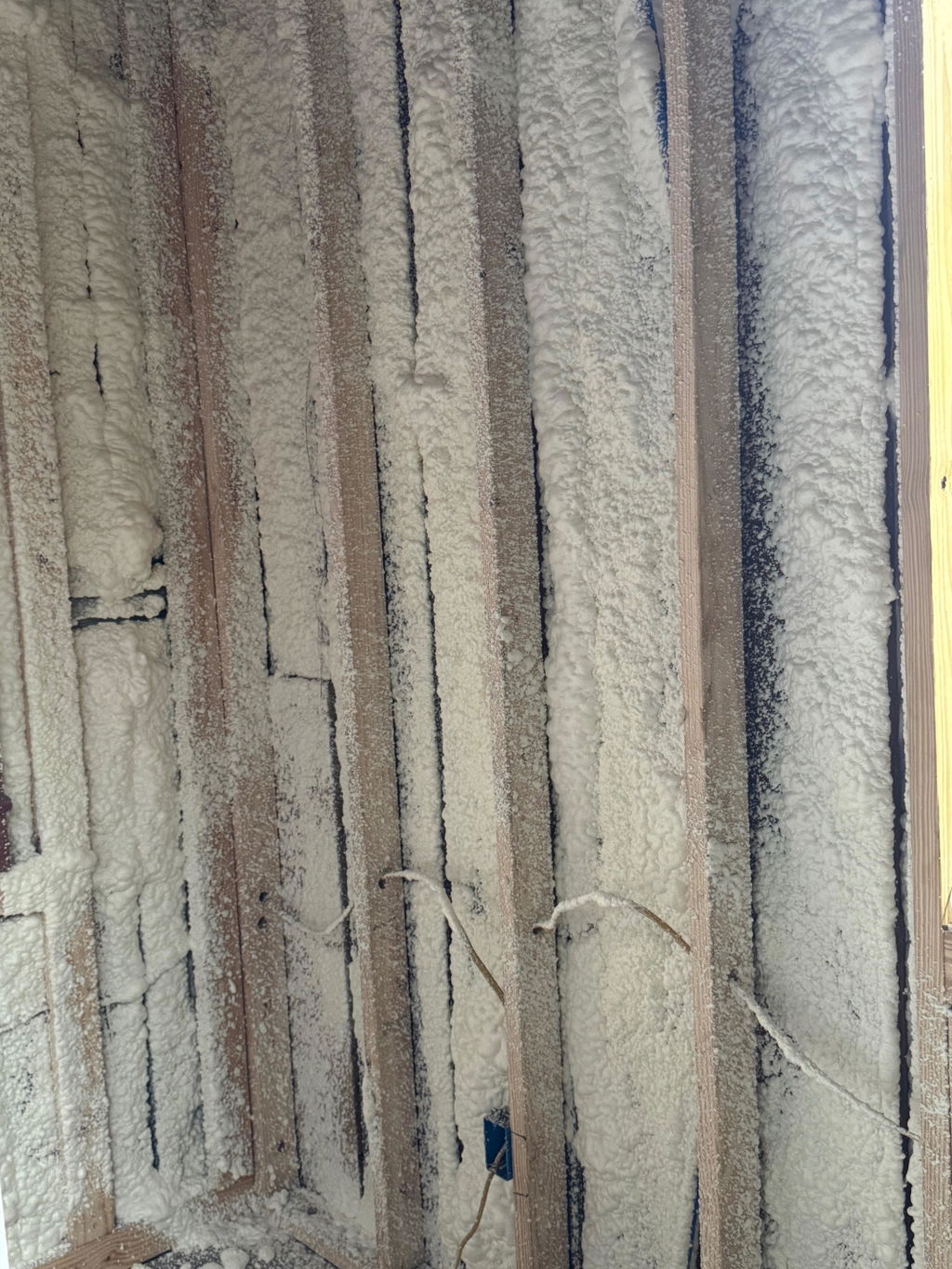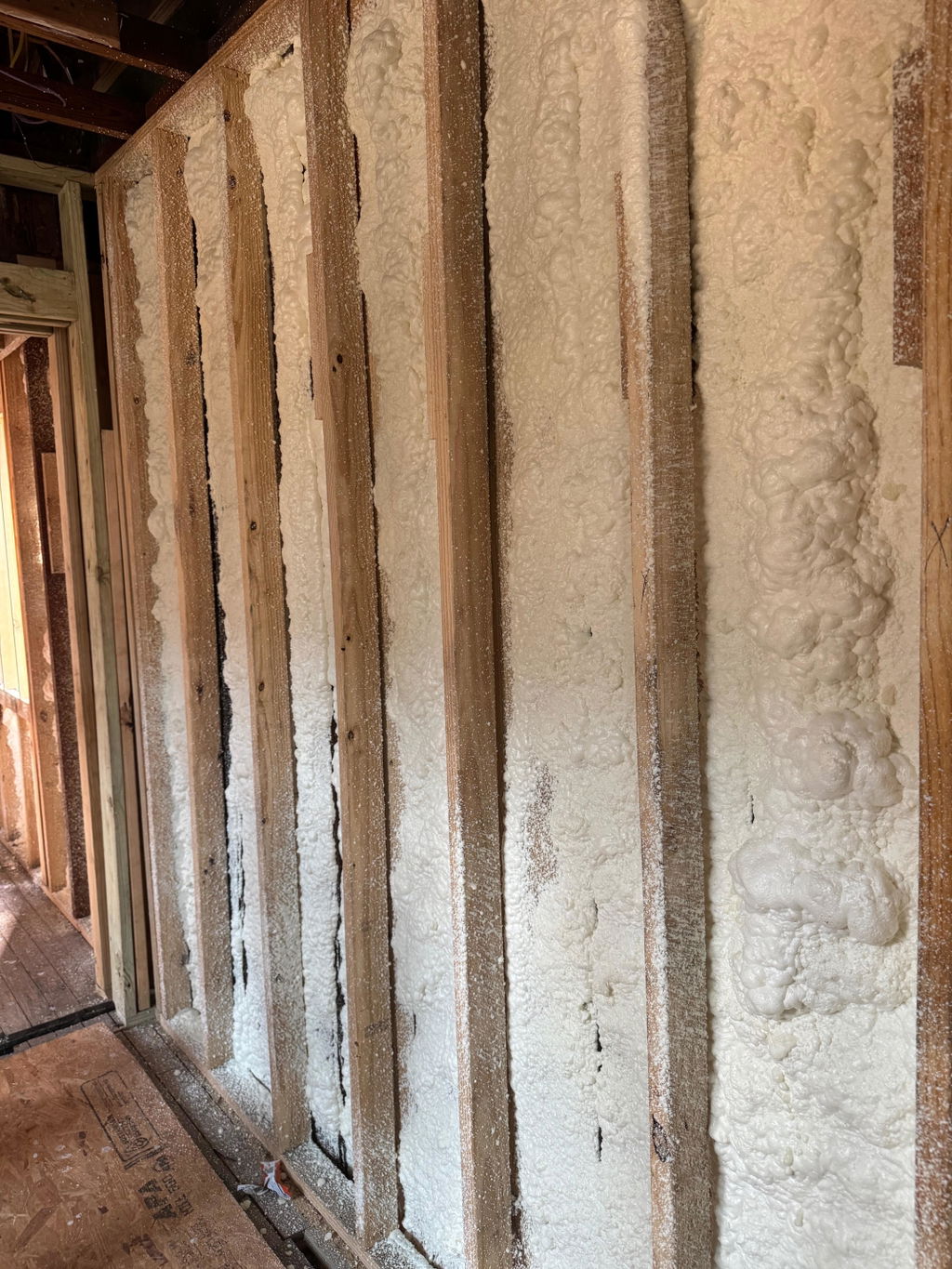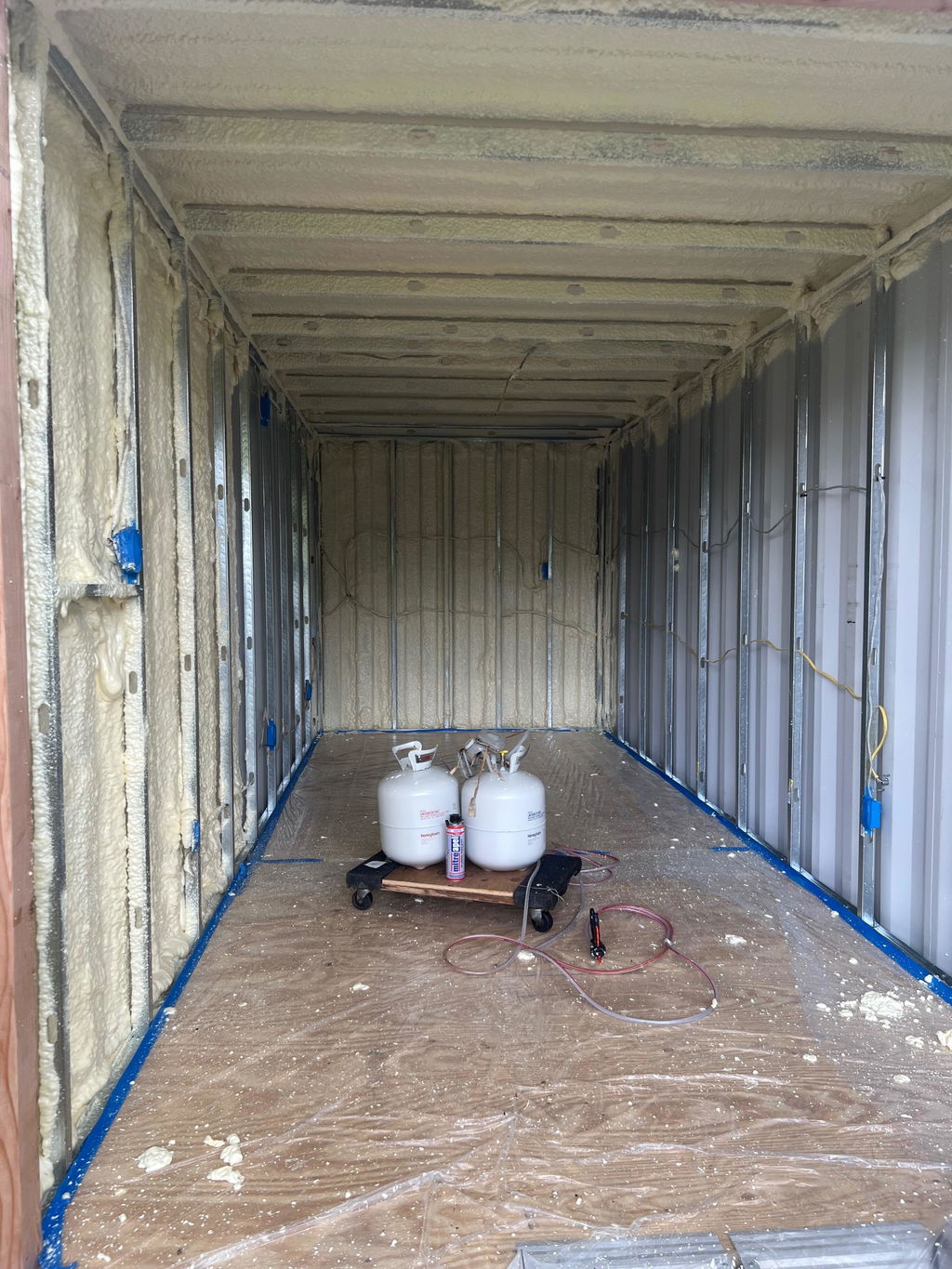
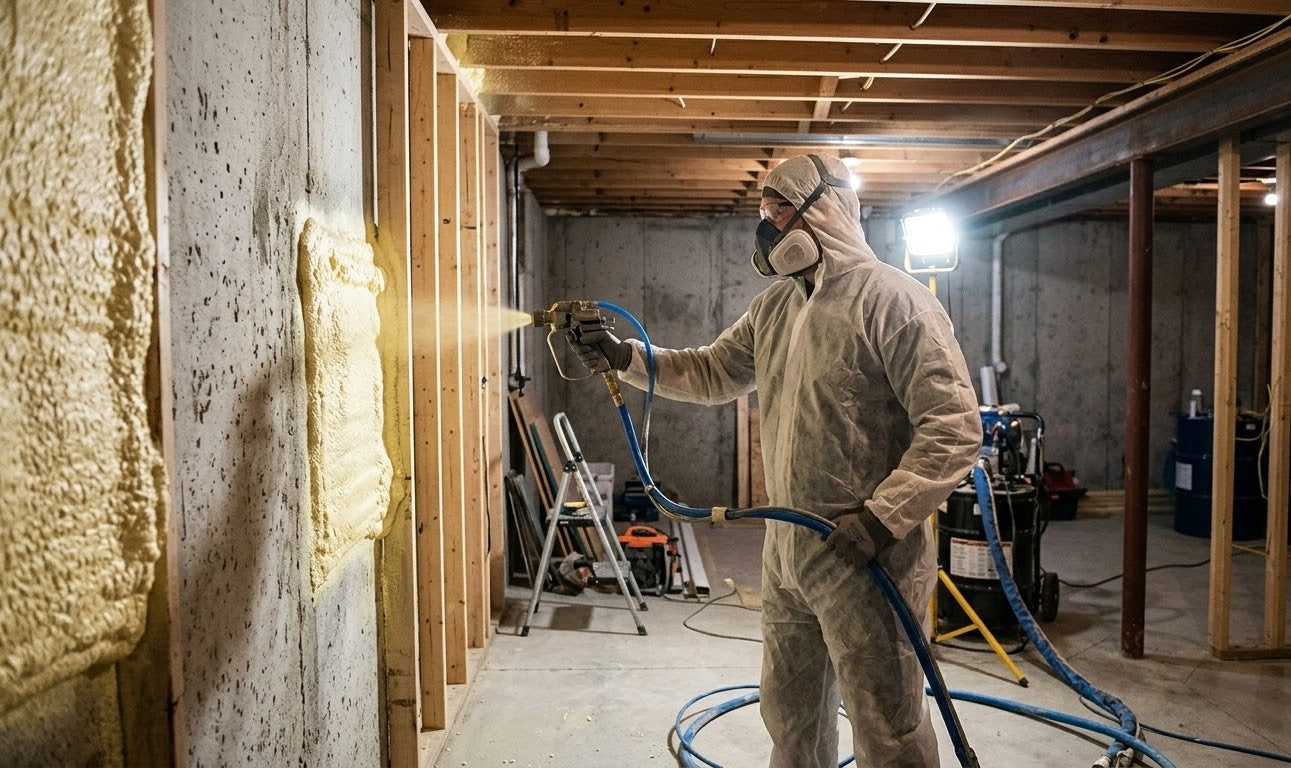
Basements are hard to insulate well. They are cooler than the rest of the house, often more humid, and full of air leaks around rim joists, pipes, and framing gaps. That combination can lead to cold floors, musty smells, uneven temperatures, and higher energy bills.
Spray foam insulation for basements is popular because it does two important jobs at once. It adds insulation and seals air leaks. That makes it one of the most effective options for basement walls, rim joists, and other problem areas when moisture issues have already been addressed.
Key takeaways
- Spray foam insulates and air seals at the same time.
- Closed-cell foam is usually the better basement choice.
- Rim joists and basement walls are the best places to start.
- Spray foam does not solve active water intrusion.
Is spray foam insulation good for basements?

Yes, spray foam is often one of the best insulation choices for basements. It works especially well in below-grade spaces because it helps control heat loss, reduce drafts, and limit air movement that contributes to condensation. That gives it an advantage over materials that insulate but do not air seal.
Still, spray foam is not the first fix for every basement. If you have active leaks, standing water, or foundation cracks, those problems need repair before insulation is installed. Spray foam can support moisture control, but it is not a substitute for waterproofing or drainage correction.
What problems does spray foam solve in a basement?
Spray foam helps solve the basement problems homeowners notice most. It can make the space feel warmer, reduce drafts, and improve comfort upstairs by sealing air leaks as well as insulating. That matters because many basement issues come from unwanted airflow, not just low R-value.
- Cold walls: reduces heat loss through concrete
- Drafts: seals framing gaps and cracks
- Musty air: limits humid air movement
- Uneven temperatures: improves whole-home comfort
- Condensation risk: reduces airflow against cool surfaces
Open-cell vs closed-cell spray foam for basements
Closed-cell spray foam is usually the better option for basements. It has a higher R-value per inch, adds rigidity, and handles below-grade conditions better than open-cell foam. That makes it a better fit for foundation walls, rim joists, and areas where moisture resistance matters.
Open-cell spray foam is softer and more vapor permeable. It may work in some interior uses, but it is not usually the first recommendation for basement walls. Homeowners comparing products often get better results when they first understand the basics of spray foam types and how each one performs in a damp-prone space.
|
Feature |
Open-cell |
Closed-cell |
|
R-value per inch |
Lower |
Higher |
|
Moisture resistance |
Lower |
Better |
|
Density |
Soft |
Rigid |
|
Best basement use |
Limited interior areas |
Walls, rim joists, band joists |
|
Upfront cost |
Lower |
Higher |
Best choice by area
- Basement walls: Closed-cell
- Rim joists: Closed-cell
- Band joists: Closed-cell
- Some ceiling areas for sound control: Open-cell may be considered
- Tight, irregular gaps: Closed-cell is usually preferred
Where should spray foam be installed in a basement?

The best locations depend on how the basement is used. In most homes, the highest-value areas are the basement walls and the rim joist. Those surfaces are responsible for a large share of heat loss and air leakage.
Rim joists deserve special attention. They are one of the most common leakage points in the entire house. A properly insulated rim joist can improve basement comfort and make floors above feel warmer.
Priority areas
- Basement walls
- Rim joists
- Band joists
- Pipe and wire penetrations
- Selected ceiling areas when needed
- Floor assemblies in special cases
If the project includes several surfaces, following a simple basement foam sequence helps avoid missed areas and uneven coverage.
Should you insulate basement walls or the ceiling?

In most cases, insulating the basement walls is the better strategy. It brings the basement inside the home’s conditioned envelope and improves comfort throughout the house. It also supports future finishing plans and reduces cold transfer from the foundation.
Ceiling insulation can make sense if the basement is only used for storage or mechanical equipment and you do not want to condition that space. Even then, the rim joist should still be sealed carefully because major air leakage often happens there.
|
Area |
Best when |
Main benefit |
Tradeoff |
|
Basement walls |
Basement is part of living space or may be finished |
Better whole-home comfort |
Bigger project |
|
Basement ceiling |
Basement stays outside conditioned space |
Separates upper floor from basement |
Basement remains colder |
|
Rim joists |
Almost always |
Major air sealing gain |
Needs careful detailing |
Spray foam vs fiberglass vs rigid foam board
Spray foam is not the only basement insulation option, but it is often the most complete one. Fiberglass is cheaper, yet it does little to stop airflow unless the assembly is perfectly sealed. Rigid foam board can work well, though it needs accurate cutting and seam sealing to perform as intended.
Spray foam stands out because it handles both insulation and air sealing in one application. That is why homeowners often compare materials based on long-term performance, not just upfront cost. A clearer product comparison usually comes from understanding the best foam fit for the wall type, moisture exposure, and available depth.
How much does spray foam basement insulation cost?
The final price depends on basement size, foam type, thickness, and job complexity. Rim joist projects cost far less than full wall coverage. A basement with access challenges, prep work, or moisture corrections will cost more than a clean, open space.
Closed-cell foam usually costs more than open-cell, but it is often the right basement product. That means the cheapest estimate is not always the best value if it uses the wrong material for below-grade conditions.
What affects cost
- Total square footage
- Closed-cell vs open-cell
- Thickness needed for target R-value
- Prep and cleaning work
- Moisture or leak repair before installation
- Obstacles such as pipes, wiring, and framing
- DIY kit versus professional installation
What R-value do you need in a basement?
The right R-value depends on climate, local code, and how the basement is used. Colder climates usually need more insulation. Mixed and milder climates may need less, but air sealing is still critical for real-world comfort.
That is why spray foam can perform better than another material with a similar nominal R-value. When the basement is sealed well, the space often feels more comfortable and stable throughout the year.
General rule of thumb
- Colder climates need more insulation depth
- Mixed climates need balance between R-value and moisture control
- Mild climates still benefit from strong air sealing
- Local code should guide final thickness
Does spray foam stop moisture, mold, or leaks?

Spray foam helps manage moisture, but it does not stop every water problem. It can reduce humid air movement and lower condensation risk. Closed-cell foam also resists water better than open-cell foam, which makes it more suitable for basement walls.
What it cannot do is fix active leaks, failed drainage, or foundation cracks. Those issues should be solved first. Homeowners usually get the best results when insulation is part of a broader moisture-resistance plan rather than treated as the only basement water solution.
What spray foam can do
- Reduce air-carried moisture
- Lower condensation risk
- Help limit musty, drafty conditions
- Improve comfort along cool wall surfaces
What it cannot do
- Stop liquid water entering through cracks
- Replace drainage improvements
- Fix standing water problems
- Repair structural damage
DIY vs professional installation
Small projects can be DIY-friendly, especially at rim joists or isolated gaps. Larger projects are different. Full basement walls require proper thickness, even coverage, surface prep, safety measures, and attention to code details.
That is why many homeowners choose a contractor for full-coverage basement work. Anyone considering a kit should first understand the limits of a typical DIY spray foam job before deciding how much of the basement to take on.
DIY may work if
- The area is small
- Moisture issues are already solved
- Access is easy
- You are sealing gaps or rim joists only
Hire a pro if
- You are insulating full walls
- You are unsure about moisture conditions
- The basement has many obstacles
- The assembly needs code review or finishing layers
Mistakes to avoid
The most common mistake is insulating before solving water problems. A basement with active seepage or damp wall surfaces is not ready for spray foam. Another mistake is choosing foam type based only on price instead of the conditions in the basement.
It is also common to ignore the rim joist or focus only on the ceiling. That leaves major leakage points untreated and reduces the benefit of the whole project.
Avoid these errors
- Spraying over wet or dirty surfaces
- Ignoring active leaks or drainage issues
- Using open-cell on basement walls without good reason
- Skipping rim joists and band joists
- Forgetting code or barrier requirements
Get the right basement insulation plan
The best basement insulation plan depends on more than square footage alone. Moisture conditions, wall type, rim joists, finishing goals, and foam selection all affect long-term performance. A basement that is insulated the right way is easier to heat, more comfortable year-round, and better protected against drafts and condensation issues.
If you are comparing options for your home, it helps to get advice based on your actual basement layout and goals. The VB insulation team can help you choose the right spray foam approach for basement walls, rim joists, and other problem areas.
FAQs about spray foam insulation for basements
Is spray foam worth it in a basement?
Yes, spray foam is often worth it in a basement because it adds insulation and air sealing in one step. That can improve comfort, reduce drafts, and support better energy efficiency. It is especially useful on walls and rim joists.
Is closed-cell spray foam better for basements?
Yes, closed-cell spray foam is usually better for basements. It has a higher R-value per inch and better moisture resistance. Those qualities make it a better fit for below-grade applications.
Should you insulate basement walls or the ceiling first?
Basement walls should usually be insulated first. That approach keeps the basement inside the conditioned envelope and improves whole-home comfort. Ceiling insulation is more useful when the basement will remain outside the living space.
Will spray foam stop basement leaks?
No, spray foam will not stop basement leaks. It can help with air sealing and moisture control, but it does not fix drainage failures, foundation cracks, or standing water. Water entry problems need separate repairs.
Can you use spray foam on rim joists?
Yes, spray foam is one of the best materials for rim joists. It expands into small gaps and seals one of the biggest air leakage points in the house. That can improve both basement comfort and floor temperature above.