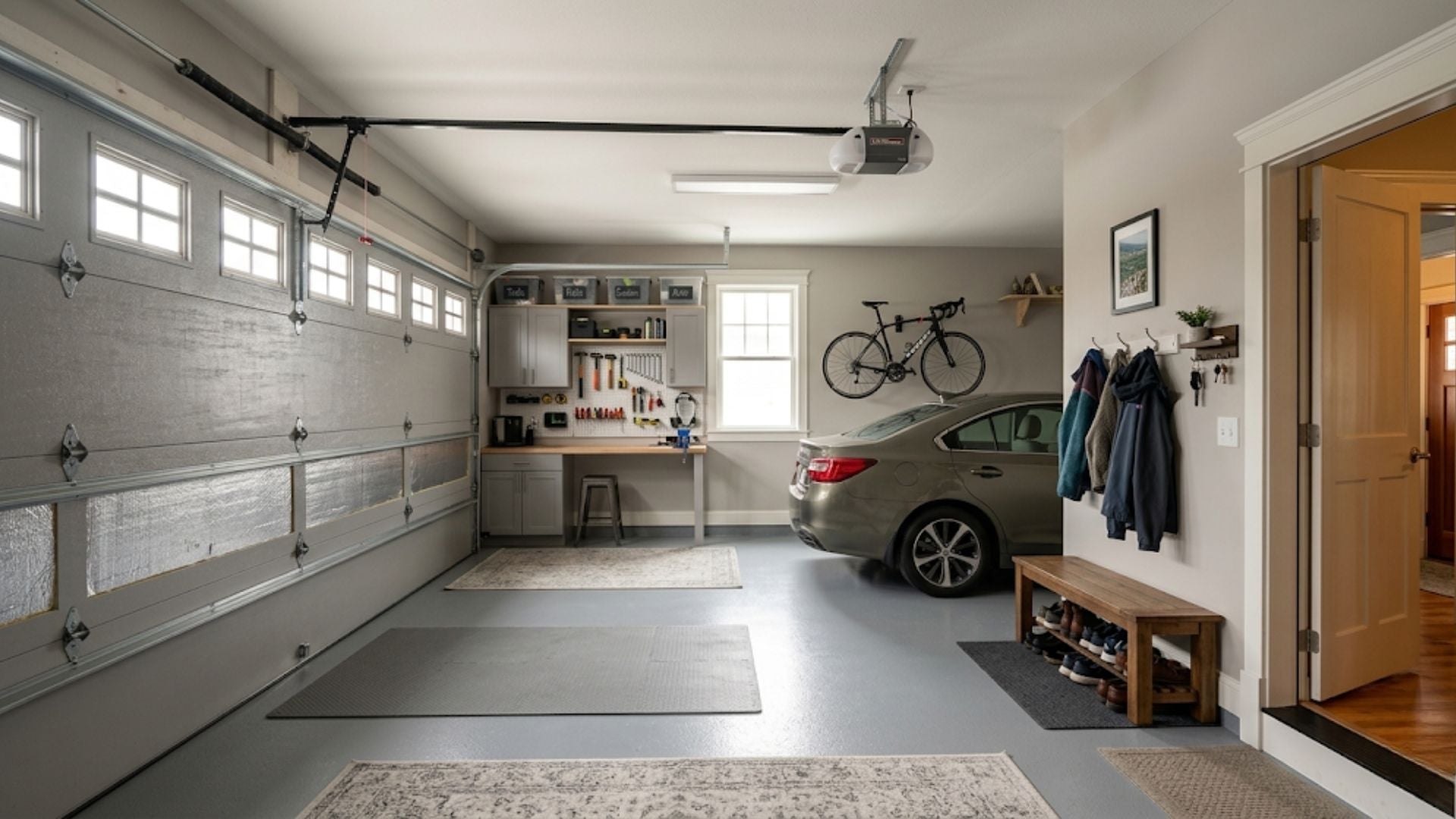
A garage door is often the largest opening in a home, yet it is frequently overlooked when homeowners think about energy efficiency. When a garage door lacks proper insulation, it becomes a major point of heat transfer. Cold air enters during winter and hot air seeps in during summer, forcing the HVAC system to work harder.
Installing an insulated garage door helps stabilize indoor temperatures and reduce energy waste. It creates a thermal barrier that slows heat transfer, improves comfort in adjacent rooms, and lowers monthly utility bills. Homeowners with attached garages often notice the biggest difference because insulation reduces the temperature fluctuations that affect nearby living spaces.
Why Garage Door Insulation Matters for Home Energy Efficiency

Garage doors cover a large surface area. Without insulation, they allow outside temperatures to influence the interior of your home. This can significantly impact rooms above or next to the garage.
Homes with attached garages experience temperature transfer through walls, ceilings, and shared structures. Insulated doors slow this heat movement, which helps maintain consistent indoor conditions.
A home’s insulation system works best when all areas are protected. This includes walls, attics, floors, and the garage. Many homeowners researching energy upgrades compare solutions like garage insulation and spray foam energy efficiency to reduce heat loss throughout the building envelope.
Common Problems With Non-Insulated Garage Doors
- Heat loss during winter months
- Heat gain during hot weather
- Higher HVAC energy consumption
- Uncomfortable temperatures in adjacent rooms
- Increased noise from outside
How Insulated Garage Doors Maintain Consistent Indoor Temperatures

Insulated garage doors are designed with multiple layers and thermal barriers that reduce heat transfer. These layers trap air or insulating material between panels, slowing the movement of heat.
When the door closes, insulation creates a protective barrier between indoor and outdoor environments.
Key Ways Insulated Doors Improve Temperature Stability
- Reduced Heat Transfer
Insulation slows the flow of heat through the garage door. This prevents outside temperatures from rapidly affecting indoor conditions.
- Protection for Adjacent Rooms
Rooms above or beside the garage often experience temperature swings. Insulated doors help stabilize these spaces by reducing thermal fluctuations.
- Better Climate Control
If the garage is used as a workspace, gym, or storage area, insulation helps maintain a more comfortable environment year-round.
How Insulated Garage Doors Lower Energy Bills

Energy loss through an uninsulated garage door forces heating and cooling systems to run longer. When this happens, utility bills increase.
Insulated doors reduce this energy loss by improving the home’s overall thermal efficiency. As a result, the HVAC system cycles less frequently and consumes less power.
Energy Savings Explained
|
Factor |
Non-Insulated Door |
Insulated Door |
|
Heat transfer |
High |
Reduced |
|
HVAC workload |
Increased |
Lower |
|
Temperature stability |
Poor |
Consistent |
|
Energy bills |
Higher |
Lower |
Additional Ways Insulated Doors Save Money
- Reduce heat loss in winter
- Limit heat gain during summer
- Decrease HVAC operating time
- Improve overall home energy efficiency
A well-insulated home often combines garage insulation with other solutions, like home insulation types, to create a complete thermal barrier.
Understanding Garage Door Insulation and R-Value
The performance of insulated garage doors is measured by R-value. This number indicates how well a material resists heat transfer.
Higher R-values mean stronger insulation and better thermal protection.
Typical R-Value Ranges
|
R-Value |
Insulation Level |
Best Use |
|
R-6 to R-9 |
Basic insulation |
Detached garages |
|
R-10 to R-13 |
Moderate insulation |
Attached garages |
|
R-14 to R-18+ |
High insulation |
Climate-controlled garages |
Homes located in colder or hotter climates benefit from higher R-value garage doors, which provide better thermal resistance.
Many homeowners also upgrade other insulation areas, including walls and ceilings. Learning about advanced insulation materials can help create a more energy-efficient building envelope.
Types of Insulated Garage Doors
Not all insulated garage doors use the same materials. The type of insulation affects durability, thermal performance, and cost.
Common Garage Door Insulation Materials
|
Insulation Type |
Description |
Benefits |
|
Polyurethane |
Foam injected into door panels |
High R-value and strong structure |
|
Polystyrene |
Rigid foam sheets inside panels |
Affordable and moderate insulation |
|
Multi-layer steel doors |
Steel layers with insulation core |
Durability and energy efficiency |
Polyurethane insulation typically delivers better performance because it expands to fill gaps within door panels.
For homeowners exploring different insulation technologies, understanding spray foam insulation basics helps explain why foam materials often outperform traditional insulation.
Additional Benefits of Insulated Garage Doors
While energy savings are a major advantage, insulated garage doors provide several additional benefits.
1. Noise Reduction
Insulated doors dampen sound vibrations. This reduces noise from traffic, weather, and garage door operation.
2. Improved Door Strength
Multi-layer construction makes insulated doors stronger than single-layer models. This increases durability and resistance to dents.
3. Better Protection for Stored Items
Extreme temperature swings can damage tools, electronics, and stored belongings. Insulation helps maintain stable conditions inside the garage.
4. Increased Comfort
If you use your garage as a workspace, insulated doors create a more comfortable environment throughout the year.
Insulated vs Non-Insulated Garage Doors

Understanding the difference between insulated and non-insulated doors helps homeowners choose the best option for their property.
|
Feature |
Non-Insulated Door |
Insulated Door |
|
Construction |
Single layer |
Multi-layer |
|
Temperature control |
Minimal |
Effective |
|
Noise reduction |
Low |
High |
|
Energy efficiency |
Poor |
Improved |
|
Durability |
Moderate |
Stronger |
Homes with attached garages benefit most from insulation because temperature fluctuations affect the living areas connected to the garage.
Final Thoughts
Insulated garage doors play an important role in improving overall home energy efficiency. By reducing heat transfer, they help maintain consistent indoor temperatures and prevent unnecessary strain on heating and cooling systems. This leads to a more comfortable living environment and lower monthly utility costs over time.
Beyond energy savings, insulated garage doors also provide added durability, noise reduction, and better protection for items stored in the garage. These benefits make them a practical upgrade for homeowners who want to improve both comfort and long-term efficiency.
Homeowners improving energy efficiency often combine garage door insulation with other upgrades such as wall, attic, and foam insulation systems.
For tailored insulation recommendations and product solutions, homeowners can Connect with VB insulation expert team to discuss the most effective options for improving comfort and efficiency throughout the home.
Frequently Asked Questions
Do insulated garage doors reduce energy bills?
Yes, insulated garage doors reduce energy bills by slowing heat transfer between the garage and outside environment. This reduces the workload on heating and cooling systems, which lowers overall energy consumption.
What is the best R-value for an insulated garage door?
The best R-value depends on climate and garage use, but most homes benefit from doors rated between R-10 and R-18. Higher R-values provide better insulation and temperature stability.
Are insulated garage doors worth the investment?
Yes, insulated garage doors are worth the investment because they improve energy efficiency, increase comfort, and reduce temperature fluctuations. Many homeowners recover the cost through lower utility bills over time.
Do insulated garage doors help in summer?
Yes, insulated garage doors help during summer by reducing heat gain from outside. This keeps garages cooler and prevents heat from spreading into nearby rooms.
What insulation materials are used in garage doors?
Common insulation materials include polyurethane foam and polystyrene panels. Polyurethane typically provides higher R-values and stronger structural support.