Roof leaks are stressful because they rarely stay small. A small drip can lead to wet insulation, ceiling stains, mold concerns, damaged inventory, and higher repair costs. For flat and low-slope roofs, leaks often come from seams, flashing, drains, fasteners, roof penetrations, and areas where water sits too long.
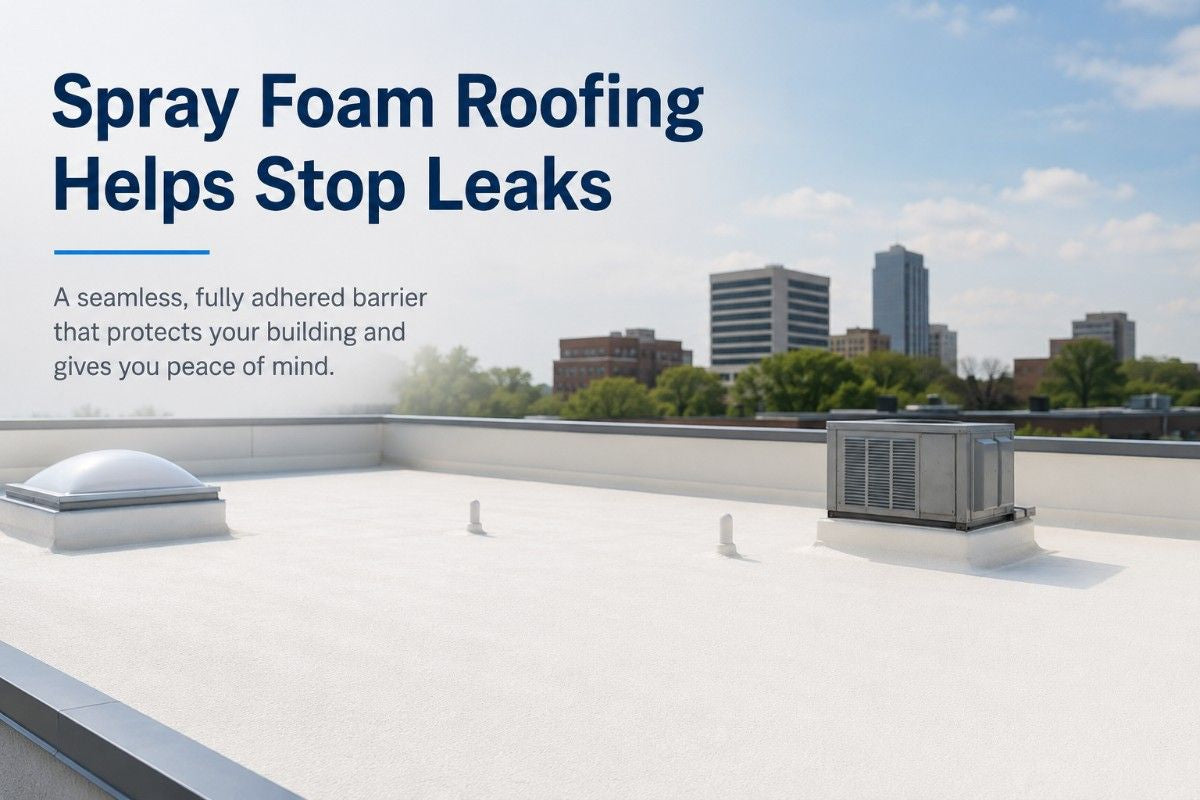
Spray foam roofing, also called SPF roofing, helps solve these problems by creating a seamless and fully adhered roofing surface. Instead of relying on overlapping sheets, exposed fasteners, or many separate repair patches, SPF forms a continuous layer over the roof. When installed with the right protective coating, it can help stop leaks, improve insulation, reduce ponding water problems, and extend the life of an existing roof.
Key Takeaways
- SPF roofing creates a seamless waterproofing layer over the roof.
- It helps seal seams, cracks, gaps, penetrations, and irregular surfaces.
- Closed-cell spray polyurethane foam resists water movement when properly installed.
- A protective elastomeric coating is required to shield the foam from UV rays and weather.
- SPF roofing is especially useful for commercial flat and low-slope roofs.
- Proper inspection, surface preparation, drainage, and maintenance are essential for long-term leak protection.
What Is Spray Foam Roofing?
Spray foam roofing is a roofing system made with spray polyurethane foam, often shortened to SPF. The foam is applied as a liquid and expands into a solid closed-cell layer that bonds to the roof surface. After the foam cures, it is covered with an elastomeric coating that protects it from sunlight, rain, wind, and surface wear.
SPF roofing is commonly used on commercial buildings, warehouses, industrial properties, offices, retail centers, schools, churches, and other low-slope roof structures. It can often be installed over an existing roof when the roof deck is sound, dry, clean, and properly prepared. For readers who want a broader foundation, this guide to spray foam basics explains how spray foam works as an insulation material.
SPF roofing is not just exposed foam sprayed on top of a building. A complete system includes the foam layer, coating layer, and sometimes granules or an additional topcoat. Each part works together to support waterproofing, insulation, durability, and weather resistance.
Main Components of an SPF Roof System

|
Component |
What It Does |
Why It Matters for Leak Protection |
|
Spray polyurethane foam |
Expands and bonds to the roof surface |
Creates a seamless base layer over cracks, seams, and small gaps |
|
Closed-cell structure |
Resists water movement through the foam |
Helps reduce moisture intrusion when properly protected |
|
Elastomeric coating |
Covers and protects the foam |
Adds UV protection and waterproofing performance |
|
Flashing details |
Seals edges, walls, curbs, and penetrations |
Protects high-risk leak areas |
|
Maintenance coating |
Restores coating thickness over time |
Helps extend service life and prevent coating failure |
Is Spray Foam Roofing Waterproof?
Spray foam roofing can create a waterproof roofing system when it is installed correctly with proper coating and detailing. The waterproofing comes from the complete system, not from bare foam alone. The foam creates a seamless, fully adhered surface, while the roof coating protects that surface from UV exposure, rain, and long-term weathering.
Closed-cell spray foam is especially important for roof waterproofing. Its dense structure helps limit water absorption and movement compared with more open materials. If you are comparing foam types for moisture control, this article on closed-cell foam use adds useful context about thickness and application planning.
The protective coating is critical because spray polyurethane foam should not be left exposed. Sunlight can degrade unprotected foam, and repeated weather exposure can weaken the roof surface. A professional SPF roof system uses coating thickness, drainage details, and inspection practices to keep the waterproofing layer performing as intended.
How SPF Roofing Helps Stop Roof Leaks
SPF roofing helps stop leaks by reducing the common entry points where water usually gets into a roof system. Many traditional roofs fail at seams, laps, flashing joints, punctures, fasteners, and aging membranes. Spray foam roofing covers these vulnerable areas with a continuous layer that bonds tightly to the existing roof.
Unlike loose-laid or mechanically fastened systems, SPF is fully adhered to the roof substrate. This matters because water is less likely to travel underneath the system once the foam is properly bonded. If one area is damaged later, the problem is usually easier to isolate because the system is not designed with open channels beneath the surface.
SPF also conforms to irregular shapes. Roofs are full of pipes, curbs, vents, drains, skylights, parapet walls, and HVAC units. Spray foam can be applied around these details to reduce gaps and create smoother transitions, but proper flashing and coating work are still required.
Common Leak Sources SPF Roofing Can Address

|
Leak Source |
Why It Leaks |
How SPF Roofing Helps |
|
Roof seams |
Seams can split, lift, or separate over time |
SPF creates a seamless layer over the surface |
|
Fasteners |
Fastener holes can loosen or allow water entry |
Foam covers and seals exposed fastener areas |
|
HVAC curbs |
Curbs often have flashing gaps and movement |
SPF conforms around curbs and transitions |
|
Roof drains |
Drains collect water and debris |
Foam can help shape drainage toward outlets |
|
Ponding areas |
Standing water stresses membranes and coatings |
SPF can be built up to improve slope |
|
Cracks and gaps |
Aging roof materials shrink, split, or separate |
Expanding foam fills small voids and surface defects |
|
Metal roof laps |
Overlaps and screws are common leak points |
SPF covers panels, laps, and screw heads |
Why Seamless Roofing Matters for Waterproofing
Seams are one of the biggest weaknesses in many roof systems. A roof may look solid from the ground, but every lap, joint, fastener, and transition can become a leak path. Over time, heat, cold, wind, foot traffic, and building movement can cause these areas to open.
Spray foam roofing reduces this risk by forming a monolithic surface. That means the roof has fewer joints and fewer separate pieces that depend on adhesives or mechanical attachment. A seamless waterproofing layer is especially valuable on flat roofs because water drains more slowly and has more time to find weak spots.
This does not mean SPF roofing removes the need for skilled installation. Edges, penetrations, walls, drains, and equipment curbs still require careful detailing. The advantage is that the field of the roof becomes continuous, which helps reduce many common leak points.
How Closed-Cell SPF Resists Moisture
Closed-cell SPF has a dense cell structure that helps resist water movement. This is one reason it is commonly used where insulation and moisture control are both important. In roofing, that closed-cell structure supports waterproofing because the foam layer does not behave like an open, absorbent material when properly installed and coated.
The foam also adds insulation value to the roof assembly. This can reduce heat transfer, support indoor comfort, and help lower cooling demand in many buildings. For a deeper look at performance, this resource on foam insulation efficiency explains how spray foam can improve thermal resistance.
Moisture resistance still depends on system quality. If the coating is too thin, damaged, or poorly maintained, the foam can become vulnerable over time. That is why SPF roofing should always include proper coating, inspections, and recoating when needed.
How SPF Roofing Helps With Ponding Water
Ponding water is a common problem on flat and low-slope commercial roofs. It happens when water remains on the roof for long periods after rain. This can stress membranes, weaken seams, collect debris, accelerate coating wear, and increase leak risk.
Spray foam roofing can be applied in different thicknesses to help improve drainage. Installers can build up low areas and create positive slope toward drains, gutters, or scuppers. This does not replace proper roof drainage design, but it can reduce standing water problems when the existing roof shape allows correction.
Ponding water should always be evaluated before SPF installation. A roof inspection can identify blocked drains, sagging decking, saturated insulation, and structural concerns. If the roof has major drainage or deck issues, those problems must be corrected before foam is applied.
SPF Roofing for Flat and Low-Slope Commercial Roofs
Flat and low-slope roofs are more leak-prone because they shed water slowly. Unlike steep-slope roofs, they depend heavily on membranes, coatings, drains, seams, and flashing details. That makes waterproofing performance especially important.
SPF roofing is well suited to many commercial flat roofs because it forms a continuous layer across large roof areas. It can cover aging seams, reduce water entry points, improve insulation, and help restore roofs that are still structurally sound. This makes it a practical option for property managers who want to reduce leaks without a full tear-off.
It can be used on many roof types after proper preparation. Common substrates may include metal roofing, built-up roofing, modified bitumen, concrete decks, and some single-ply systems. The existing roof must be inspected for trapped moisture, loose materials, adhesion problems, and surface contamination before installation.
Spray Foam Roofing vs. Patch Repairs vs. Roof Replacement
Many building owners start with patch repairs because they are quick and familiar. A patch can work when the leak is small, isolated, and easy to identify. The problem is that repeated patching often fails when the roof has broader seam failure, widespread aging, poor drainage, or many penetrations.
SPF roofing is different because it treats the roof surface as a complete waterproofing system. Instead of chasing individual leaks one at a time, it creates a new protective layer over the existing roof. That makes it useful when leaks are recurring or when the roof is aging but still structurally suitable for restoration.
Roof replacement is still necessary in some cases. If the deck is damaged, insulation is saturated, or the existing system is unstable, restoration may not be enough. A roofing professional should inspect the roof before deciding between patching, SPF restoration, or replacement.
Comparison of Leak Repair Options
|
Option |
Best For |
Main Benefit |
Limitation |
|
Patch repair |
Small isolated leaks |
Fast and lower upfront cost |
May not solve hidden or widespread issues |
|
SPF roof restoration |
Recurring leaks on sound roofs |
Seamless waterproofing and added insulation |
Requires skilled installation and coating maintenance |
|
Full roof replacement |
Severe roof failure or saturated systems |
Removes failed materials completely |
Higher cost, more disruption, and more waste |
Other Waterproofing Benefits of Spray Foam Roofing
SPF roofing does more than stop leaks. It can also improve energy performance, reduce roof system weight, limit tear-off waste, and extend the life of an existing roof. These benefits are valuable for building owners who want both waterproofing and long-term roof performance.
Because SPF adds insulation above the roof deck, it can reduce heat transfer through the building envelope. Reflective coatings can also help limit heat gain on sunny days. If moisture control is part of a broader insulation plan, this article on waterproof foam benefits supports the connection between spray foam and water resistance.
SPF roofing is also lightweight compared with many replacement systems. In many projects, it can be applied over an existing roof after proper repairs and preparation. This may reduce landfill waste, labor time, building disruption, and the need to remove large areas of old roofing.
When SPF Roofing Is a Good Fit

SPF roofing is often a strong option when the existing roof is leaking but still structurally sound. It is especially useful when the roof has many seams, aging flashings, small cracks, or multiple penetrations. It can also help when the owner wants waterproofing and insulation in one system.
A good candidate roof is dry, stable, clean, and able to support adhesion. The surface must be prepared so the foam can bond properly. If the building owner is planning material quantities or coverage for smaller foam projects, this guide to foam coverage planning offers helpful background on estimating foam use.
SPF roofing may be a good fit when:
-
The building has recurring roof leaks.
-
The roof is flat or low-slope.
-
The existing roof has many seams or fasteners.
-
Ponding water is creating leak risk.
-
The roof deck is structurally sound.
-
The owner wants better insulation.
-
A full tear-off would be costly or disruptive.
-
The building needs a renewable roof restoration system.
When SPF Roofing May Not Be the Right Choice
SPF roofing is not the right answer for every leaking roof. If the roof has saturated insulation, structural damage, trapped moisture, or major deck movement, those problems must be repaired first. Covering serious hidden damage with foam can create bigger problems later.
Weather conditions also matter during installation. Spray foam and coatings require the right temperature, surface dryness, wind conditions, and cure time. Poor installation conditions can affect adhesion, foam quality, coating performance, and long-term waterproofing.
Installer experience is another major factor. SPF roofing requires proper equipment, foam ratio control, coating thickness, flashing details, and safety procedures. Building owners should work with trained professionals who understand roofing, drainage, coatings, and spray polyurethane foam systems.
How SPF Roofing Is Installed to Stop Leaks
The installation process starts with a roof inspection. Contractors check the roof surface, seams, flashing, drains, penetrations, moisture levels, and deck condition. This step is important because SPF roofing should not be installed over wet, unstable, or contaminated materials.
After inspection, damaged areas are repaired and the roof is cleaned. Loose materials, debris, oils, rust, and wet sections must be addressed before foam is applied. Some surfaces also require primer to improve adhesion.
Once the roof is prepared, the spray polyurethane foam is applied in layers. Installers can adjust the foam thickness to cover the surface and improve drainage in selected areas. After curing, the roof receives an elastomeric coating, and some systems may include granules or additional protective layers.
Basic SPF Roofing Installation Steps
-
Inspect the roof and identify leak sources.
-
Test for trapped moisture and saturated areas.
-
Clean the roof surface thoroughly.
-
Repair damaged decking, seams, flashing, or insulation.
-
Prime the surface when required.
-
Apply spray polyurethane foam at the specified thickness.
-
Shape foam to improve drainage where possible.
-
Apply elastomeric coating at the required coverage rate.
-
Detail penetrations, edges, curbs, and drains.
-
Complete a final inspection and maintenance plan.
Protective Roof Coatings for SPF Systems
The roof coating protects the foam from sunlight, rain, temperature changes, and surface wear. Without coating, exposed spray foam can degrade from UV exposure. The coating is what turns the foam layer into a complete roofing system.
Common SPF roof coatings include silicone, acrylic, and polyurethane coatings. Silicone is often used where ponding water resistance is important. Acrylic coatings are commonly used in reflective roof systems, while polyurethane coatings can offer strong durability in certain conditions.
The best coating depends on the roof condition, climate, drainage, foot traffic, and project requirements. Coating thickness also matters because a thin coating may wear out too quickly. Routine inspections help determine when recoating is needed.
Maintenance Tips to Keep an SPF Roof Leak-Free
SPF roofs are renewable, but they are not maintenance-free. Regular inspections help protect the coating and identify small problems before they become leaks. Most roof problems are less expensive to fix when they are found early.
Building owners should keep drains, gutters, and scuppers clear. Debris can trap water and increase coating wear. Foot traffic should also be controlled because tools, sharp objects, and heavy equipment can puncture or damage the coating.
Recoating is part of long-term SPF roof care. When the coating wears down, a new coating layer can restore protection and extend the roof’s service life. This is one reason SPF roofing is often viewed as a restoration system instead of a one-time patch.
SPF Roof Maintenance Schedule
|
Maintenance Task |
Recommended Timing |
Why It Helps |
|
Visual roof inspection |
Twice per year |
Finds coating wear, punctures, cracks, and debris |
|
Storm inspection |
After major storms |
Catches wind, hail, or impact damage early |
|
Drain cleaning |
As needed |
Prevents water backup and ponding |
|
Coating check |
Annually |
Confirms coating thickness and surface condition |
|
Penetration inspection |
Twice per year |
Protects high-risk leak areas around curbs, vents, and pipes |
|
Recoating |
Based on coating wear |
Restores UV and waterproofing protection |
Signs Your Roof May Need SPF Waterproofing
Recurring leaks are one of the clearest signs that the roof needs more than another temporary patch. If leaks appear in different areas after each storm, the roof may have widespread seam failure or membrane deterioration. SPF roofing may help when the roof is still sound but no longer watertight.
Water stains, musty odors, blistered roof surfaces, rusted metal panels, and ponding water are also warning signs. These symptoms can point to moisture intrusion, trapped water, or aging roof materials. A professional inspection can determine whether the roof can be restored or must be replaced.
High energy bills may also indicate a roof performance problem. Poor insulation, air movement, and roof heat gain can affect indoor comfort and operating costs. SPF roofing can improve both waterproofing and insulation when the roof is a suitable candidate.
Choosing Materials and Accessories for Spray Foam Projects

SPF roofing projects should be handled by qualified roofing professionals, especially on commercial roofs. However, understanding foam materials, spray equipment, sealants, and safety supplies helps building owners make better decisions. It also helps maintenance teams understand why proper preparation and product compatibility matter.
For non-roofing insulation projects, homeowners and contractors often compare spray foam kits, accessories, applicators, sealants, and safety gear before starting work. Roofing systems are more complex because they involve drainage, coating thickness, flashing, weather exposure, and code requirements. Still, the same principles apply: correct product selection and careful application are essential.
Safety should never be treated as optional. Spray foam work requires proper protective equipment, ventilation planning, surface preparation, and application controls. Anyone handling foam materials should follow manufacturer guidance and use appropriate protective work gear for the task.
Need Help Choosing the Right Spray Foam Roofing Solution?
VB Insulation helps property owners, contractors, and maintenance teams choose spray foam products that support better moisture control, insulation performance, and long-term building protection. With options for closed-cell spray foam, insulation kits, applicators, sealants, accessories, and safety equipment, VB Insulation provides practical product support for projects where waterproofing and energy efficiency matter.
Whether you are dealing with recurring leaks, planning a roof restoration, or comparing spray foam solutions for a building envelope project, VB Insulation can help you move forward with the right materials and guidance. Their team supports smarter product selection so users can protect their structure, reduce heat loss, and complete projects with more confidence.
FAQ
Does spray foam roofing stop leaks?
Yes, spray foam roofing can stop leaks when it is installed as a complete SPF roof system. It creates a seamless, fully adhered layer that covers many common leak points. The protective coating then shields the foam from UV rays, rain, and weather exposure.
SPF roofing helps stop leaks by addressing:
-
Seams and membrane laps
-
Small cracks and gaps
-
Fastener areas
-
HVAC curbs and roof penetrations
-
Low areas where water collects
-
Aging roof surfaces that are still structurally sound
Is spray foam roofing good for flat roofs?
Yes, spray foam roofing is often a good option for flat and low-slope roofs. These roofs are more likely to leak because water drains slowly and has more time to find weak areas. SPF roofing helps by creating a seamless waterproofing layer and improving drainage in selected low spots.
It works especially well on commercial roofs with many seams, penetrations, drains, and mechanical units. The foam conforms around irregular roof shapes and reduces exposed joints. A professional inspection is still needed to confirm that the roof is dry, stable, and suitable for restoration.
Can SPF roofing fix ponding water?
Yes, SPF roofing can help reduce ponding water by improving slope in low areas. Installers can apply foam at different thicknesses to help guide water toward drains, gutters, or scuppers. This can reduce standing water that damages membranes and increases leak risk.
SPF cannot solve every drainage problem by itself. If the roof deck is sagging, drains are poorly placed, or structural issues exist, those problems may need separate correction. The best approach starts with a roof drainage inspection.
Can spray foam roofing be applied over an existing roof?
Yes, spray foam roofing can often be applied over an existing roof if the surface is suitable. The existing roof must be dry, clean, stable, and properly prepared before installation. Any wet insulation, loose membrane, damaged decking, or serious defects must be repaired first.
Common roof surfaces may include metal, built-up roofing, modified bitumen, concrete, and some single-ply membranes. Compatibility depends on roof condition and preparation requirements. A contractor should test adhesion and inspect for trapped moisture before applying foam.
What protects spray foam roofing from rain and sun?
An elastomeric roof coating protects spray foam roofing from rain, sun, and weathering. The coating covers the foam and provides UV resistance, waterproofing protection, and surface durability. Without this coating, exposed foam can break down over time.
Common coating options include:
-
Silicone roof coating
-
Acrylic roof coating
-
Polyurethane roof coating
The right coating depends on ponding water risk, climate, roof traffic, and project goals. Coating thickness and maintenance are just as important as coating type.
How long does spray foam roofing last?
Spray foam roofing can last many years when it is installed and maintained correctly. Its service life depends on foam quality, coating thickness, roof drainage, climate, foot traffic, and maintenance. Recoating at the right time can extend the system’s performance.
A neglected SPF roof can fail earlier than expected. Regular inspections help identify worn coating, punctures, cracks, and drainage issues. Small repairs and timely recoating are key to long-term leak protection.
Is SPF roofing better than repeated roof patching?
Yes, SPF roofing is often better than repeated patching when leaks are widespread or recurring. Patch repairs usually treat isolated areas, while SPF restoration creates a continuous waterproofing layer across the roof. This can reduce the need to chase new leaks after every storm.
Patching may still be useful for a single small leak. However, if seams, fasteners, ponding water, and flashing details are failing across the roof, restoration may provide better long-term value. The right choice depends on roof age, damage level, moisture condition, and budget.
When should spray foam roofing be avoided?
Spray foam roofing should be avoided when the roof has serious hidden damage that has not been repaired. Saturated insulation, rotten decking, unstable membranes, trapped moisture, and major structural issues can prevent a successful installation. These problems must be corrected before SPF is considered.
It may also be unsuitable during poor weather conditions. Wet surfaces, high wind, improper temperatures, and bad application conditions can affect foam quality and adhesion. A qualified contractor should decide whether the roof is ready for SPF installation.