![How to Insulate Attic: 6 Methods [DIY]](http://vbinsulation.com/cdn/shop/articles/jf629QNanFQeNRLCrZNgzN_161581e0-ac33-47ff-a22b-69437280d20d.gif?v=1769183836&width=980)
Proper attic insulation plays a major role in maintaining indoor comfort, controlling heat transfer, and reducing energy costs. A well-insulated attic helps prevent heat loss during colder months and limits heat gain during warmer months, allowing HVAC systems to operate more efficiently.
There are several ways to insulate an attic, including fiberglass batts, blown-in cellulose, rigid foam boards, and spray foam insulation. Each attic insulation method offers different levels of thermal performance, air sealing capability, moisture resistance, and long-term durability.
Selecting the right approach depends on attic layout, climate conditions, and performance expectations. Among available options, spray foam attic insulation is often chosen for its ability to combine insulation and air sealing in a single application while maintaining consistent performance over time.
How to Choose the Best Attic Insulation for Your Home
Choosing the right attic insulation depends on several factors, including climate, budget, attic design, and long-term energy goals.
Consider:
-
Required R-value based on climate zone and local code
-
Air sealing needs, particularly in older or leaky homes
-
Moisture control to reduce condensation and mold risk
-
Installation approach, including DIY versus professional application
For homeowners seeking maximum energy efficiency with minimal maintenance, spray foam attic insulation consistently outperforms traditional materials.

Six Common Attic Insulation Methods
Attic insulation systems vary significantly in how they manage heat flow, air movement, and moisture. Performance differences are driven by material density, application method, and installation depth. Understanding how each method performs helps determine the most effective insulation strategy for specific attic conditions.
1. Spray Foam Insulation
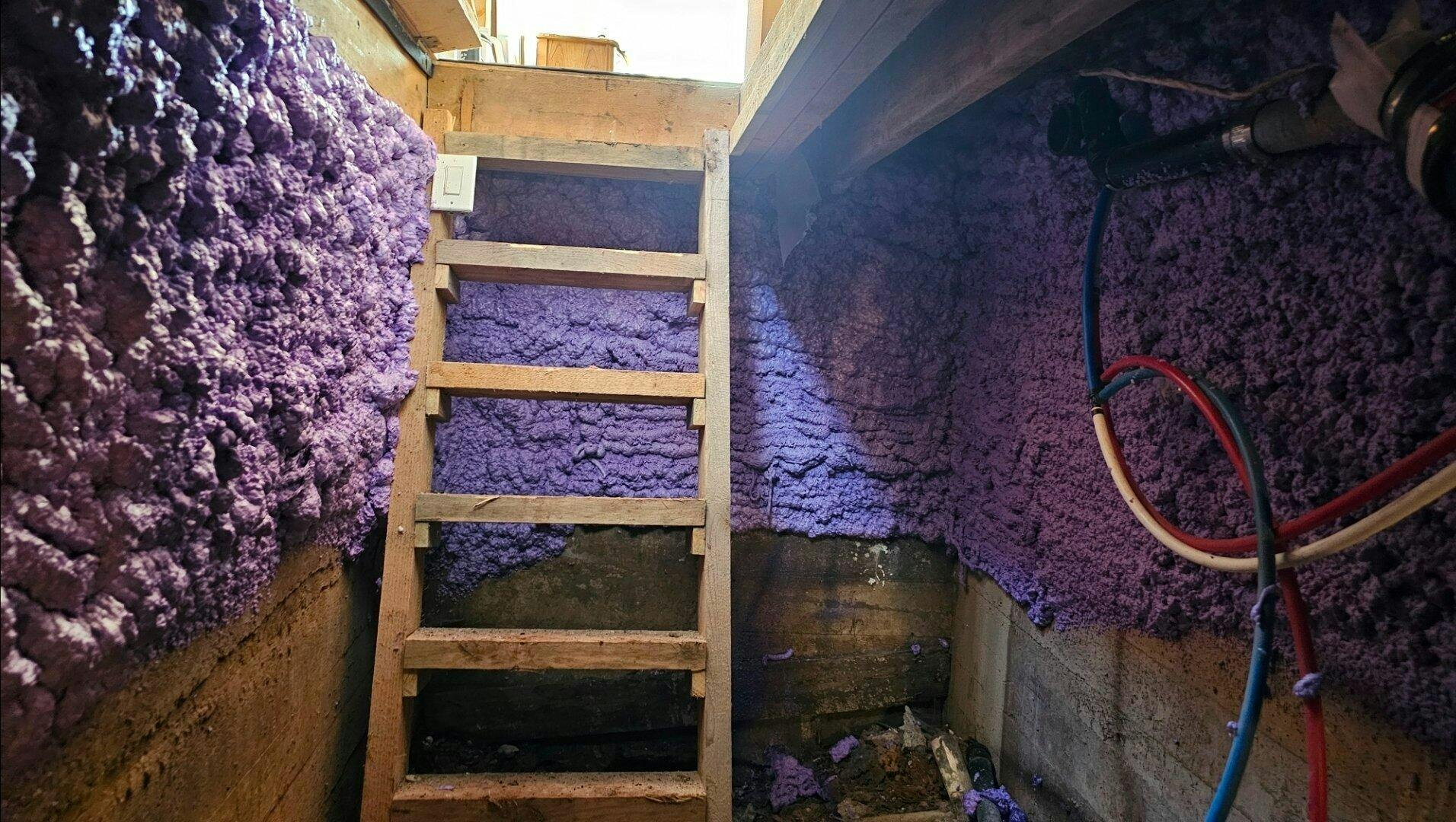
Spray foam insulation is widely recognized for its ability to provide both insulation and air sealing in a single application. It expands on contact, filling gaps, seams, and penetrations that are difficult to address with traditional materials.
Key characteristics:
-
Provides high R-value per inch compared to fibrous insulation
-
Creates an effective air barrier, significantly reducing air leakage
-
Helps control moisture movement when properly installed
-
Adheres directly to substrates, reducing long-term settling or degradation
Spray foam insulation can be installed using professional equipment or DIY spray foam kits designed for residential attic applications.
2. Fiberglass Batt Insulation
Fiberglass batt insulation is a commonly used, cost-effective insulation method, particularly in accessible attic spaces with standard framing.
Key characteristics:
-
Manufactured in pre-cut batts or rolls for placement between joists
-
Does not require specialized equipment or machinery
-
Provides consistent thermal resistance when installed without compression or gaps
-
Performance depends heavily on proper installation and air sealing
Limitations include reduced effectiveness around wiring, ductwork, and irregular framing, as well as susceptibility to air movement if not paired with an air barrier.
3. Plastic Air Chute (Baffle) Systems
Plastic air chutes, also known as ventilation baffles, are not insulation themselves but play a critical role in attic insulation systems by maintaining proper airflow.
Key characteristics:
-
Installed along the roof rafters to preserve ventilation paths from the soffits
-
Helps prevent condensation buildup and ice dam formation
-
Supports moisture management by allowing continuous airflow
-
Commonly used in conjunction with batt or blown-in insulation
Air chutes help protect insulation performance by preventing airflow obstruction and moisture accumulation at the roof deck.
4. Blown-In Loose-Fill Cellulose Insulation
Loose-fill cellulose insulation is commonly used to supplement existing attic insulation or to insulate irregular attic spaces.
Key characteristics:
-
Installed using mechanical blowing equipment
-
Conforms well around obstructions and uneven surfaces
-
Provides moderate R-value and improved coverage compared to batts
-
Often made from recycled paper materials treated for fire resistance
Over time, cellulose insulation may settle, which can reduce its effective R-value. Proper depth and density are critical to long-term performance.
5. Rigid Foam Board Insulation
Rigid foam board insulation is used in attic applications where space constraints or high thermal resistance are required.
Key characteristics:
-
Offers high R-value per inch
-
Provides continuous insulation when installed without gaps
-
Commonly used on attic access doors, knee walls, or roof decks
-
Lightweight and dimensionally stable
Rigid foam boards require careful sealing at joints and edges to prevent air leakage and thermal bridging.
6. Mineral Wool Insulation
Mineral wool insulation, also known as stone wool or slag wool, is valued for its thermal and fire-resistant properties.
Key characteristics:
-
Manufactured from volcanic rock or industrial byproducts
-
Naturally non-combustible and resistant to high temperatures
-
Provides sound absorption benefits
-
More resistant to moisture than traditional fiberglass
Mineral wool is typically installed in batt form and performs best when combined with proper air sealing measures.
Comparison of Common Attic Insulation Options
The following comparison highlights key performance characteristics of common attic insulation materials, including thermal resistance, air sealing capability, moisture resistance, and installation considerations.
|
Insulation Type |
Typical R-Value (per inch) |
Air Sealing Capability |
Moisture Resistance |
Fire Resistance |
Installation Notes |
|
R-6.0 to R-7.0 |
Excellent |
High (acts as vapor retarder) |
Meets ASTM E84 when rated |
Expands to seal gaps; higher cost but long-term performance |
|
|
R-3.5 to R-3.8 |
Very Good |
Moderate (vapor-permeable) |
Meets ASTM E84 when rated |
Effective air barrier; allows drying to interior |
|
|
Fiberglass Batts |
R-2.9 to R-3.2 |
Poor (without air sealing) |
Low |
Fire-resistant with facing |
Performance depends on precise installation |
|
Blown-In Cellulose |
R-3.2 to R-3.8 |
Fair |
Moderate |
Treated for fire resistance |
Requires blower; may settle over time |
|
Rigid Foam Board |
R-4.0 to R-6.5 |
Good (when sealed) |
High |
Fire-rated versions available |
Best for continuous insulation and limited spaces |
|
Mineral Wool |
R-3.7 to R-4.2 |
Fair |
High |
Naturally non-combustible |
Denser batts; good sound and fire performance |

DIY Attic Insulation Best Practices and Safety Tips
Proper preparation improves attic insulation performance and reduces common installation issues. Follow these best practices when insulating an attic as a DIY project:
-
Air Seal First: Seal gaps around wiring, plumbing, duct penetrations, and framing using caulk or expanding spray foam before adding insulation.
-
Install Ventilation Baffles: Use rafter baffles at soffits to keep ventilation pathways open and prevent insulation from blocking airflow.
-
Wear Safety Gear: Use gloves, goggles, and a respirator or dust mask to protect against insulation fibers, dust, and airborne particles.
-
Protect Light Fixtures; Do not allow insulation to contact recessed lights or heat-producing fixtures unless they are IC-rated. Install approved covers where required.
Why Choose Vega Bond Spray Foam Insulation Over Other Options
Vega Bond spray foam insulation is engineered to deliver reliable thermal performance, effective air sealing, and long-term durability for residential attic applications. Compared to traditional insulation materials, Vega Bond spray foam integrates multiple performance functions into a single system.
Key advantages include:
-
High Thermal Resistance, Designed to provide strong R-value performance, helping reduce conductive heat transfer and improve overall attic energy efficiency.
-
Integrated Air Sealing expands on application to seal gaps, cracks, and penetrations that contribute to air leakage, supporting tighter building envelopes than fibrous insulation alone.
-
DIY and Professional Application Options, Available in spray foam insulation kits suitable for residential DIY use, eliminating the need for specialized equipment while delivering professional-grade results.
-
Cost-Effective Coverage, High-yield expansion allows efficient material usage, supporting effective coverage with reduced material waste.
For attic insulation projects where performance, durability, and application efficiency are priorities, selecting the right spray foam system is essential. Vega Bond spray foam insulation products are designed to support both DIY users and professionals with consistent results across residential attic applications. For additional guidance on selecting the right spray foam insulation for your attic, contacting the VB Insulation team can help clarify product options, coverage requirements, and application considerations.
Final Considerations for Attic Insulation
Choosing how to insulate an attic requires careful consideration of insulation performance, air sealing effectiveness, moisture control, and long-term durability. While several attic insulation methods are available, material properties and installation quality directly affect overall energy efficiency. Spray foam attic insulation provides both thermal resistance and air sealing in a single application, making it a reliable option for homeowners, contractors, and builders. When properly installed, spray foam helps reduce heat transfer, limit air leakage, and support efficient HVAC operation. For projects requiring consistent performance and long-term stability, Vega Bond spray foam insulation offers a durable attic insulation solution.
Frequently Asked Questions About Attic Insulation
How do I insulate an attic properly?
Proper attic insulation requires selecting the correct insulation material, achieving the recommended R-value, and minimizing air leakage. Air sealing should be completed before or during insulation installation to ensure optimal thermal performance and energy efficiency.
What is the best attic insulation method?
Spray foam attic insulation is often considered the most effective method because it provides both insulation and air sealing. This dual function helps reduce heat transfer and uncontrolled airflow more effectively than traditional insulation materials.
Can attic insulation be installed as a DIY project?
Yes. Certain attic insulation methods are suitable for DIY installation when proper preparation and safety measures are followed.
Common DIY options include:
-
Fiberglass batt insulation
-
Select spray foam insulation kits designed for residential use
What R-value is recommended for attic insulation?
Recommended attic insulation R-values vary based on climate zone and local building codes.
Typical guidelines include:
-
R-38 for moderate climates
-
R-49 to R-60 for colder climates
Higher R-values may be required for new construction or energy-efficient homes. Always verify local building code requirements before selecting insulation thickness or material.
Does spray foam attic insulation help reduce energy costs?
Yes. By reducing air leakage and improving overall thermal performance, spray foam attic insulation can lower heating and cooling demands, resulting in reduced energy costs over time.