
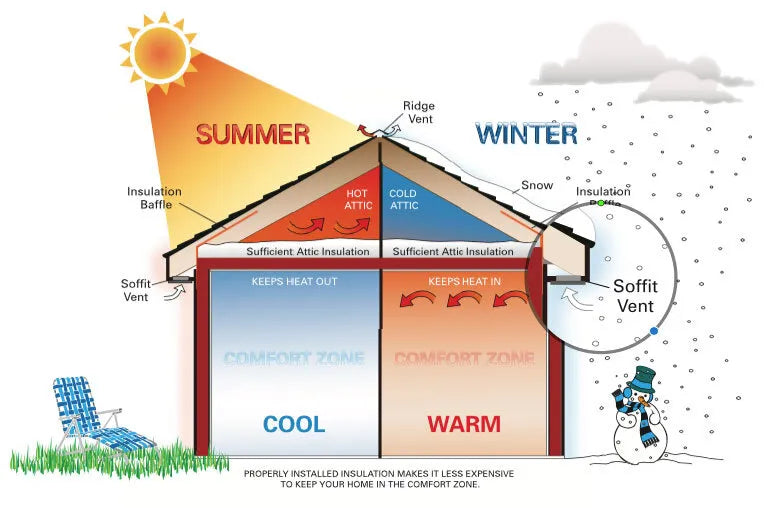
Spray foam insulation is one of the most effective ways to improve energy efficiency in a home or building. It works by slowing heat transfer and sealing common air leaks at the same time. That dual function makes it more effective than many traditional insulation materials in areas where drafts, gaps, and moisture movement reduce thermal performance.
Energy savings depend on the age of the home, the climate zone, the condition of the building envelope, and the quality of the installation. In some homes, the results are modest because insulation levels are already good. In other homes, especially older properties with air leakage and poor attic insulation, spray foam can make a noticeable difference in comfort, HVAC efficiency, and monthly utility bills.
How Spray Foam Reduces Heating and Cooling Costs
Spray foam can lower heating and cooling costs by reducing unwanted air leakage and improving thermal resistance. Homes lose energy when warm or cool air escapes through attics, walls, crawl spaces, and rim joists. Spray foam helps reduce those losses by creating a tighter seal.
The biggest impact is often seen in parts of the home where leakage is most common. These areas usually include:
-
Attics
-
Crawl spaces
-
Rim joists
-
Wall cavities
How Spray Foam Compares to Other Insulation Types
Spray foam often performs better in real-world conditions because it combines insulation value with air sealing. Fiberglass and cellulose can still be effective, but their performance depends heavily on proper installation and full coverage. If gaps or air leaks remain, they may not perform as well.
Spray foam is especially useful in irregular spaces and hard-to-seal areas. If you want a better understanding of foam insulation basics, it helps explain why spray foam is often chosen for high-performance insulation projects.
Spray Foam vs Other Insulation Types
|
Insulation Type |
Air Sealing Ability |
Thermal Performance |
Best Use Cases |
|
Spray Foam |
Excellent |
High |
Attics, walls, crawl spaces, rim joists |
|
Fiberglass Batts |
Low |
Moderate |
Standard wall cavities |
|
Blown Cellulose |
Moderate |
Moderate to High |
Attics, enclosed cavities |
|
Rigid Foam Board |
Good |
High |
Basements, exterior walls |
Factors That Affect Spray Foam Insulation Efficiency
Spray foam efficiency depends on more than the material itself. Several conditions influence how well it performs in a home.
House Age and Existing Insulation
Older homes usually have more air leaks and weaker insulation. That means spray foam can often create a bigger improvement in comfort and energy performance. If the existing insulation is damaged, missing, or poorly installed, spray foam can help create a more complete thermal barrier.
Homes with good existing insulation may see smaller gains. Even so, spray foam can still improve air control and indoor comfort.
Climate and Installation Area
Climate affects how much insulation is needed and where it delivers the best results. In hot regions, spray foam helps reduce heat gain and keeps cooled air inside. In cold regions, it helps reduce heat loss and maintain indoor warmth.
The installation area matters just as much. The highest-value locations often include:
-
Attics
-
Crawl spaces
-
Rim joists
-
Exterior walls
Windows, Doors, and Duct Leakage
Spray foam can improve efficiency, but it cannot solve every energy problem on its own. If windows, doors, or ducts are leaking badly, some energy loss will continue. A whole-house approach usually creates the best results for both comfort and energy savings.

Open-Cell vs Closed-Cell Spray Foam
Open-cell and closed-cell spray foam both improve energy efficiency, but they are used differently. Open-cell foam expands more and is useful in areas where broad coverage and air sealing are the main goals. Closed-cell foam is denser and offers a higher R-value per inch, which makes it a strong choice where space is limited.
The best option depends on the project area, climate, and budget. If you are comparing attic foam options, the right choice should match both the assembly and the energy goal.
When Open-Cell Foam Works Best
Open-cell foam is often a good fit for:
-
Interior cavities
-
Attics
-
Larger spaces needing expansion coverage
When Closed-Cell Foam Works Best
Closed-cell foam is often a better fit for:
-
Crawl spaces
-
Exterior walls
-
Tight cavities needing higher R-value
Best Areas to Use Spray Foam for Energy Savings
Spray foam can be used in many parts of a home, but some areas offer a better return than others. The best results usually come from spaces where air leakage and thermal loss are highest.
|
Area |
Main Problem |
Main Benefit |
|
Attic |
Heat gain and air leakage |
Better HVAC efficiency and indoor comfort |
|
Crawl Space |
Drafts and moisture |
Improved floor comfort and enclosure performance |
|
Rim Joist |
Air infiltration |
Reduced drafts and energy loss |
|
Walls |
Heat transfer |
More stable indoor temperatures |
If attic efficiency or overall thermal control is the main goal, VB insulation fits naturally into projects focused on stronger building envelope performance.
Is Spray Foam Worth It for Energy Savings?
Spray foam is often worth it when a home has air leakage, uneven indoor temperatures, or weak insulation in key areas. It is especially useful in older homes and in places where traditional insulation cannot create a tight seal. The value comes from both energy performance and comfort improvement.
It can also help with:
-
Reducing drafts
-
Improving indoor comfort
-
Supporting HVAC efficiency
-
Creating a tighter building envelope
If product selection is part of the decision, this guide on spray foam choices can support the comparison.
FAQs
Is spray foam insulation good for saving energy?
Yes, spray foam insulation is good for saving energy. It reduces air leakage and improves thermal performance, which helps lower heating and cooling demand.
Key benefits include:
-
Sealing gaps and cracks
-
Reducing heat transfer
-
Improving attic and wall performance
Is spray foam better than fiberglass for energy efficiency?
Yes, spray foam is often better than fiberglass when air leakage is part of the problem. Fiberglass insulates well, but it does not always create an air seal by itself.
Spray foam is often better for:
-
Irregular spaces
-
Leakage-prone areas
-
Combined air sealing and insulation
Where should spray foam be installed first?
The attic is often the best place to start. It is one of the biggest sources of energy loss in many homes, especially when leaks and duct losses are present.
A common priority order is:
-
Attic or roofline
-
Rim joists
-
Crawl space
-
Problem wall areas
Does spray foam improve comfort too?
Yes, spray foam improves comfort as well as efficiency. It helps reduce drafts, hot and cold spots, and uneven temperatures throughout the home.
It can improve comfort by:
-
Creating more stable indoor temperatures
-
Reducing drafts
-
Improving room-to-room consistency

Upgrade Your Home with Vega Bond Spray Foam Insulation
Vega Bond spray foam insulation is a practical solution for homeowners who want better energy efficiency and more consistent indoor comfort. It helps reduce air leaks, improve thermal performance, and support lower heating and cooling demand throughout the year. That makes it a smart choice for attics, walls, crawl spaces, and other areas where energy loss is common.
With the right application, Vega Bond can help create a tighter building envelope and improve overall insulation performance. It is also designed for convenient use, making it easier to handle a range of residential insulation projects. For product details or support with your insulation needs, connect with VB insulation expert team.