When you are sealing gaps or insulating your home, the type of spray foam you choose matters more than most people realize. Fire safety, air sealing performance, and code compliance all come into play. Many homeowners assume all spray foams are the same, but that assumption can lead to costly or unsafe decisions.
Fire block foam and regular spray foam serve different purposes. One is designed specifically to slow the spread of fire and smoke, while the other focuses mainly on insulation and air sealing. Understanding how each works helps you make a safer, more informed choice for your home.
What Is the Difference Between Fire Block Foam and Regular Spray Foam?
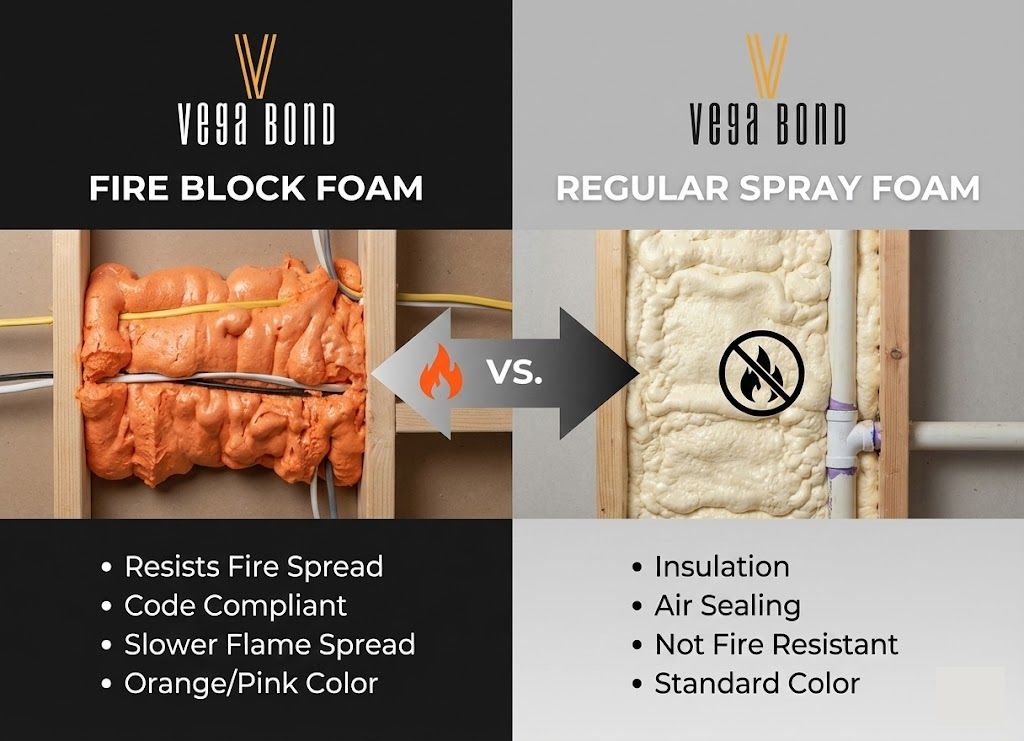
Fire block foam is designed to resist fire spread and meet fire safety codes. Regular spray foam is designed mainly for insulation and air sealing, not fire resistance.
Here is a clear breakdown.
Fire Block Foam Explained
Fire block foam is a specialized expanding foam formulated to slow the movement of flames and smoke through gaps and penetrations. It is commonly used in:
-
Stud cavities
-
Electrical and plumbing penetrations
-
Top plates and bottom plates
-
Wall and ceiling openings
Key features include:
-
Fire-resistant additives
-
Compliance with building and fire codes
-
Slower flame spread compared to standard foams
-
Typically orange or pink for easy identification
Fire block foam is not fireproof, but it is fire-resistant. Its main job is to help contain a fire long enough to improve occupant safety and meet inspection requirements.
Regular Spray Foam Explained
Regular spray foam is primarily used for:
-
Insulation
-
Air sealing
-
Energy efficiency improvements
-
Moisture control
It expands to fill gaps and cracks, helping reduce drafts and heat loss. Closed-cell spray foam, in particular, is valued for its high R-value, moisture resistance, and structural strength, making it a popular choice for basements, attics, and exterior walls.
Common traits include:
-
Excellent thermal performance
-
Strong air sealing ability
-
Available in open-cell and closed-cell types
-
Not fire-rated unless specially formulated
Some spray foams may include fire-retardant chemicals, but that does not automatically make them fire block foam.
Which Is Safer for Your Home?
Fire Safety Comparison
When it comes to safety, fire block foam has a clear advantage.
Fire block foam:
-
Slows flame spread
-
Helps contain smoke
-
Meets fire-blocking building codes
-
Required in many residential applications
Regular spray foam:
-
Can ignite when exposed to flame
-
May release smoke if burned
-
Not approved for fire stopping
-
Requires additional fire barriers in many cases
Building codes often require fire blocking in wall cavities and between floors. Using the wrong foam can lead to failed inspections or increased risk during a fire.
Health and Indoor Air Quality
Both types of foam are safe when installed correctly and fully cured. However, safety depends on:
-
Proper ventilation during installation
-
Following manufacturer cure times
-
Using foam appropriate for the application
Fire block foam is typically used in smaller amounts for sealing penetrations, while spray foam insulation may be applied across large surfaces.
Fire Block Foam vs. Regular Spray Foam for Common Uses
|
Use Case |
Fire Block Foam |
Regular Spray Foam |
|
Electrical & Plumbing Penetrations |
Designed to slow fire and smoke spread. |
Not recommended unless specifically fire-rated. |
|
Wall Cavities (Stud Bays) |
Required in many code-regulated areas. |
Can be used but may require a fire barrier. |
|
Attics & Rooflines |
Not intended for insulation purposes. |
Excellent for thermal insulation and air sealing. |
|
Basements & Crawl Spaces |
Suitable for sealing small gaps and penetrations. |
Ideal for moisture control and insulation. |
|
Fire Code Compliance |
Meets fire-blocking requirements. |
Typically not compliant on its own. |
|
Energy Efficiency |
Minimal insulation value. |
High R-value and energy-saving performance. |
|
Smoke & Flame Resistance |
Slows flame and smoke spread. |
Can ignite without fire protection. |
|
Typical Color |
Orange or pink |
White or yellow |
|
Primary Purpose |
Fire safety and sealing |
Insulation and air sealing |
Why Fire Block Foam Matters for Building Codes

Fire block foam plays a critical role in meeting residential building codes. Most codes require fire blocking to:
- Slow fire spread between floors
- Prevent smoke movement
- Protect escape routes
- Improve overall fire containment
Inspectors often look for approved fire block foam in:
- Stud cavities
- Around pipes and wires
- Between floors and wall plates
These applications typically rely on single-component spray foam, which is easy to apply, expands to seal gaps effectively, and meets fire-blocking requirements when used correctly.
Cost Comparison and Long-Term Value
When comparing fire block foam and regular spray foam, the real difference is not the price per can. The true cost comes from how each product is used, what it is designed to do, and what it helps you avoid over time.
Instead of thinking in terms of “which is cheaper,” it is more accurate to compare function, compliance, and long-term performance.
What Actually Affects Cost
The cost difference between fire block foam and regular spray foam usually comes down to application scope, not material price.
Fire block foam costs are influenced by:
- Limited application areas such as penetrations and framing gaps
- Use in code-required fireblocking locations
- Smaller volume but higher safety importance
- Reduced risk of inspection failure or rework
Regular spray foam costs are influenced by:
- Coverage area and thickness
- Type of foam used (open-cell or closed-cell)
- Labor and equipment needs
- Whether additional fire protection layers are required
In many projects, spray foam represents the larger material investment, while fire block foam plays a smaller but more critical role in code compliance and safety.
Value Comparison: What You Gain Over Time
|
Category |
Fire Block Foam |
Regular Spray Foam |
|
Primary purpose |
Fire and smoke control |
Insulation and air sealing |
|
Long-term benefit |
Improved fire safety and code compliance |
Energy efficiency and comfort |
|
Where value shows up |
Inspections, safety, reduced fire spread |
Lower energy loss, better indoor comfort |
|
Typical use volume |
Small, targeted areas |
Large surface coverage |
|
Risk if misused |
Failed inspection or safety gaps |
Code violations or required barriers |
Fire block foam delivers long-term value by reducing risk. It helps slow the spread of fire and smoke through hidden cavities, which is why it is commonly required in residential construction.
Regular spray foam delivers value by improving performance. When properly installed, it reduces air leakage, stabilizes indoor temperatures, and supports energy efficiency goals.
What You Need to Know Before Choosing Spray Foam
- Fire block foam is designed for fire safety and code compliance
- Regular spray foam is best for insulation and energy efficiency
- They serve different purposes and are not interchangeable
- Using the right foam improves safety, performance, and inspection outcomes
- A combination of both is often the smartest approach
Choosing the right spray foam is not about price alone. It is about using the right material in the right place.

Why VB Insulation Is the Best Choice for Fire-Safe Foam Solutions
VB Insulation focuses on delivering code-compliant, high-performance insulation solutions for both homeowners and professionals. Their product selection is built around safety, efficiency, and ease of use.
What sets VB Insulation apart:
- Fire block foams designed to meet building code requirements
- Professional-grade spray foam kits for insulation projects
- DIY-friendly options with clear application guidance
- Products suited for residential and light commercial use
- Emphasis on energy efficiency and long-term performance
For homeowners who want peace of mind and contractors who need reliable results, VB Insulation offers products that balance safety with performance.
Frequently Asked Questions
Is fire block foam the same as fireproof foam?
No. Fire block foam is fire-resistant, not fireproof. It slows flame and smoke spread but does not stop fire completely.
Can I use regular spray foam instead of fire block foam?
Only in non fire-rated areas. Building codes often require fire block foam in wall penetrations and between floors.
Does fire block foam insulate as well as spray foam?
No. Fire block foam is designed for sealing and fire resistance, not thermal insulation.
Is fire block foam required by code?
In many areas, yes. Especially around wiring, plumbing, and vertical wall cavities.
Can DIY homeowners use fire block foam safely?
Yes, when following instructions and using proper safety gear. Many fire block foams are designed for homeowner use.