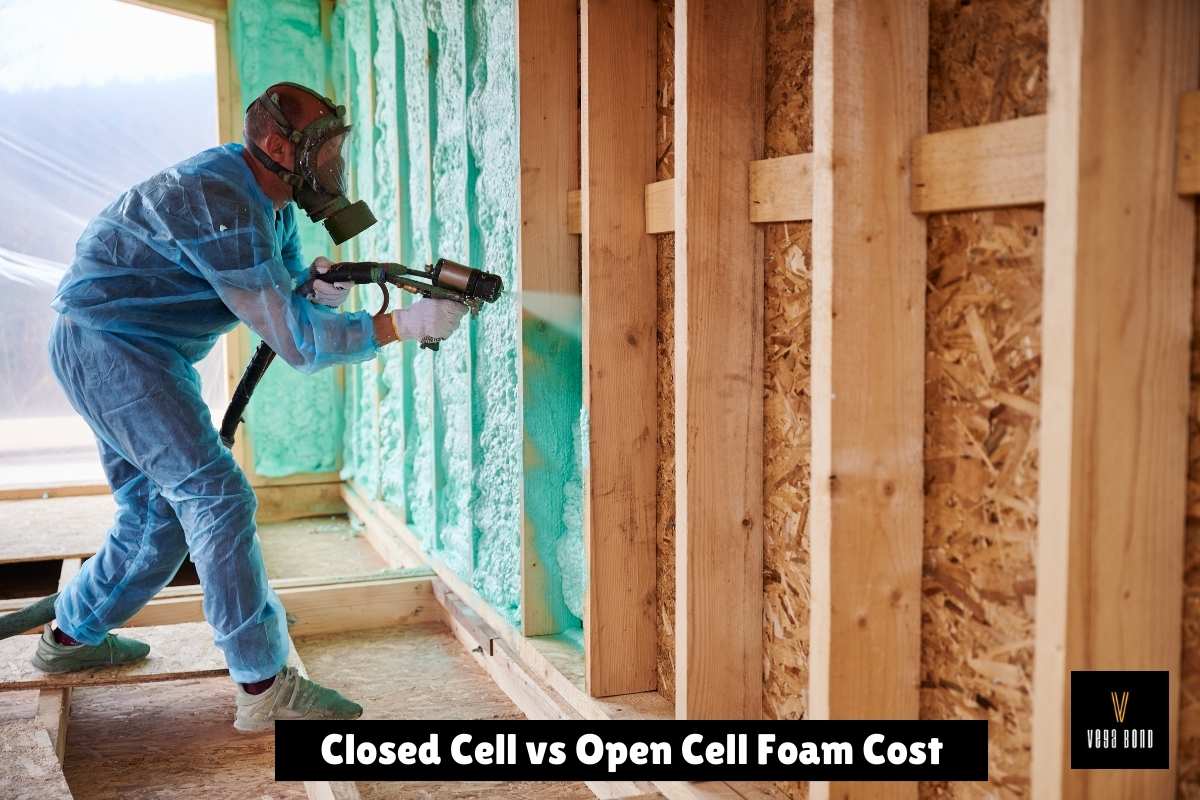
Open-cell spray foam typically costs $0.45–$0.75 per square foot, making it the more budget-friendly option. It expands more, uses less material, and is best for interior walls and sound control.
Closed-cell spray foam is more expensive, typically ranging from $1.00 to $1.50 per square foot. The higher cost comes from its dense structure, higher R-value per inch, built-in moisture barrier, and added structural strength.
If upfront cost is the main concern, open-cell foam is cheaper. However, closed-cell foam often saves more money over time by reducing energy bills and preventing moisture-related damage.
Foam insulation has changed the game for home energy efficiency. Yet, the debate over the cost of closed Cell vs. open cell foam still confuses many. Knowing the difference can save you money and make your home more comfortable, whether you're updating an old house or building a new one.
We'll simplify the foam insulation cost comparison to guide you in your choice. We'll look at the price, performance, and long-term value of both types. By the end, you'll know how to pick the best foam insulation for your needs and budget.
Key Takeaways
- Closed cell foam costs more but has a higher R-value per inch.
- Open cell foam is cheaper and great for soundproofing.
- Long-term energy savings can pay for the insulation costs.
- Climate and project details affect the best foam insulation choice.
- Getting professionals to install it is key to the best results.

Understanding Foam Insulation Types
Foam insulation is a popular choice for improving energy efficiency and indoor comfort, and it mainly comes in two types: closed-cell foam and open-cell foam. Understanding how these two options differ can help you select the right insulation for your home or building project.
Open-cell foam is lighter, softer, and more flexible. It expands significantly when applied, allowing it to fill gaps and cracks easily. Because of its spongy structure, open-cell foam is effective for sound absorption and is commonly used in interior walls and ceilings. However, it has a lower R-value per inch and does not provide strong resistance to moisture, so it is not ideal for areas exposed to water or high humidity.
Closed-cell foam is denser and more rigid. Its tightly packed cells create a strong barrier against air and moisture, making it suitable for basements, crawl spaces, exterior walls, and roofs. Closed-cell foam also offers a higher R-value per inch, meaning it provides better insulation in less space. In addition, it adds structural strength to the building.
Choosing between closed-cell and open-cell foam depends on your budget, climate, and where the insulation will be installed.
What Is Closed-Cell Foam?
Closed-cell foam is a type of spray foam insulation made of tightly packed, rigid cells that do not allow air or moisture to pass through. Once applied and cured, it expands and hardens to create a dense, durable insulation layer that provides thermal resistance, air sealing, and moisture protection in walls, roofs, basements, and crawl spaces.
Benefits of Closed-Cell Foam:
-
High R-value per inch for strong thermal insulation.
-
Acts as an air and vapor barrier.
-
Resists moisture and prevents mold growth.
-
Adds structural strength to buildings.
-
Improves energy efficiency and lowers utility costs.
Key Differences Between Closed and Open Cell Foam
When we compare closed Cell vs open cell foam, several key differences stand out. Let's explore these differences:
| Feature | Closed Cell Foam | Open Cell Foam |
|---|---|---|
| Density | High (2 lb/ft³) | Low (0.5 lb/ft³) |
| R-value per inch | 6.0 - 7.0 | 3.6 - 3.8 |
| Moisture resistance | Excellent | Poor |
| Air barrier | Yes | No |
| Sound dampening | Good | Excellent |
These differences show how each foam type performs and how it costs. Closed cell foam is better at insulation and keeping moisture out. Open cell foam is great for reducing sound and being flexible.

Factors Affecting Foam Insulation Costs
1. Type of Foam
The type of foam insulation you choose plays a major role in determining overall cost. Open-cell and closed-cell foams differ in density, performance, and material usage, which directly affects pricing. Open-cell foam is lighter and expands more, making it less expensive, while closed-cell foam is denser and offers higher insulation value and moisture resistance. Your choice should balance budget, insulation needs, and long-term performance.
-
Open-cell foam is lower cost.
-
Closed-cell foam is more expensive.
-
Higher performance increases price.
2. Area Size and Thickness
The total area being insulated and the thickness of the foam application strongly influence cost. Larger spaces naturally require more material and labor, while thicker insulation layers increase both material usage and installation time. Projects that demand higher R-values will cost more upfront but may offer better energy savings over time.
-
Larger areas need more foam.
-
Thicker layers increase material use.
-
Higher R-values raise overall cost.
3. Installation Location
Where the foam insulation is installed can significantly affect pricing due to accessibility and complexity. Areas like attics, crawl spaces, and tight wall cavities require more preparation, safety measures, and labor time. Easy-to-access locations generally cost less, while challenging spaces increase labor effort and installation difficulty.
-
Attics and crawl spaces cost more.
-
Limited access raises labor time.
-
Ceiling height and layout affect cost.
4. Labor and Professional Expertise
Labor costs vary based on installer experience, project complexity, and regional pricing. Skilled professionals often charge higher rates, but proper installation is critical for performance and durability. Poor installation can lead to insulation failure, moisture issues, or energy loss, making professional expertise a valuable long-term investment.
-
Experienced installers charge more.
-
Labor rates vary by region.
-
Quality work prevents future costs.
5. Climate and Moisture Conditions
Climate conditions influence the type and amount of foam insulation required. Homes in cold regions need higher R-values, while humid or coastal areas often require moisture-resistant closed-cell foam. These environmental factors can increase material costs but are essential for ensuring comfort, durability, and protection against moisture-related damage.
-
Humid climates need moisture control.
-
Cold areas require higher insulation levels.
-
Climate demands affect material choice.
| Factor | Impact on Cost |
|---|---|
| Foam Type | Closed-cell more expensive than open-cell |
| Project Size | Larger areas increase overall cost |
| Installation Complexity | Difficult access raises labor costs |
| Geographic Location | Affects material and labor prices |
| Market Conditions | Can cause price fluctuations |
Knowing these factors helps homeowners and contractors plan better for foam insulation projects. It's key to consider all these things when making a budget for insulation.
Closed Cell vs Open Cell Foam Cost: Price Comparison
When looking at foam insulation, it's key to know the cost differences between closed Cell and open cell foam. We'll go over the prices to help you decide.
Cost Per Square Foot
Spray foam insulation prices change based on the type. Closed cell foam costs $1.00 to $1.50 per square foot. Open cell foam is cheaper, costing $0.35 to $0.55 per square foot. This price gap comes from closed cell foam's higher density and material cost.
Installation Expenses
It is important to add installation costs to the total price. A foam insulation cost estimator should include labor, which is $0.50 to $1.00 per square foot for both types. Getting professionals to install it ensures it's done right and works best.
Long-Term Value Considerations
Closed cell foam costs more upfront but insulates better and resists moisture. Open cell foam is cheaper but might need replacing sooner. A cost calculator can show how closed cell foam saves money on energy bills over time.
| Foam Type | Initial Cost | Lifespan | Energy Savings |
|---|---|---|---|
| Closed Cell | Higher | 50+ years | 30-50% annually |
| Open Cell | Lower | 20-30 years | 20-30% annually |
Think about your climate, budget, and future goals when picking between closed Cell and open cell foam insulation. The right choice can mean big savings on energy bills and better home comfort.
Performance Comparison: R-Value and Energy Efficiency
When comparing insulation performance, closed-cell foam outperforms open-cell foam in R-value and energy efficiency. Closed-cell foam has a higher R-value per inch, typically ranging from R-6 to R-7, while open-cell foam offers R-3.6 to R-3.8 per inch. This means closed-cell foam provides superior thermal resistance even in thinner applications, making it ideal for areas where space is limited.
The density of closed-cell foam also enhances its ability to seal air and block moisture, reducing drafts and potential water damage. Open-cell foam is less dense but still provides effective air sealing, particularly in interior walls and ceilings. Both foam types contribute to energy savings, but closed-cell foam is generally more efficient in extreme temperatures or harsh climates.
While open-cell foam has a lower upfront cost, closed-cell foam often provides greater long-term savings through reduced energy bills and improved building durability. Choosing the right foam depends on your budget, insulation needs, and climate conditions, but both options can significantly improve comfort and energy efficiency in your home.
FAQ
What is the difference between closed Cell and open cell foam insulation?
Closed-cell foam insulation has a dense, rigid structure with closed air pockets, which makes it more resistant to moisture and air infiltration. Open-cell foam, however, has an open, sponge-like structure. It allows for better air circulation but has less moisture resistance.
Which type of foam insulation is more expensive, closed Cell or open Cell?
Closed cell foam insulation is usually more expensive than open cell foam. The dense structure and extra materials needed for closed cell foam raise its cost.
How does the cost of foam insulation vary per square foot?
Foam insulation costs range from $0.50 to $2.00 per square foot for open-cell foam and $1.00 to $4.00 for closed-cell foam. Prices change based on project size, Location, and installation difficulty.
What factors affect the overall cost of foam insulation?
Many things affect foam insulation costs. These include material and labor costs, project size, how hard it is to install, and where you are. Market conditions and raw material prices also play a role.
How does the R-value of closed cell and open cell foam compare?
Closed cell foam insulation has a higher R-value than open cell foam. It ranges from R-6 to R-7 per inch. Open cell foam is R-3.5 to R-4 per inch. Closed cell foam's higher R-value means better thermal resistance and energy efficiency, but it costs more.
Are there any long-term value considerations for choosing between closed Cell and open cell foam?
Closed-cell foam insulation costs more upfront but offers better moisture resistance and air sealing. This can lead to long-term energy savings and lower maintenance costs. Open-cell foam is cheaper but might need extra moisture barriers or vapor retarders in some cases.